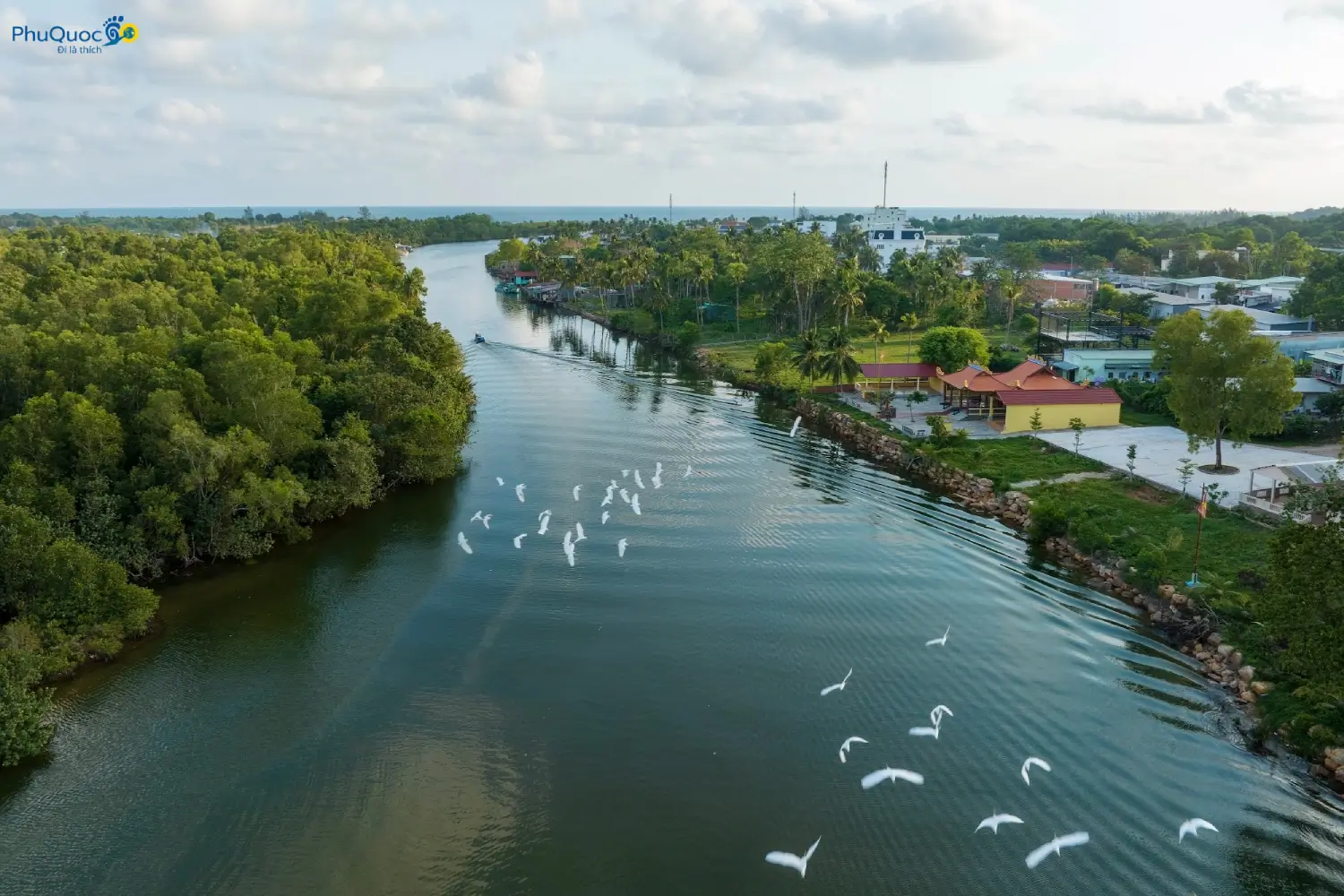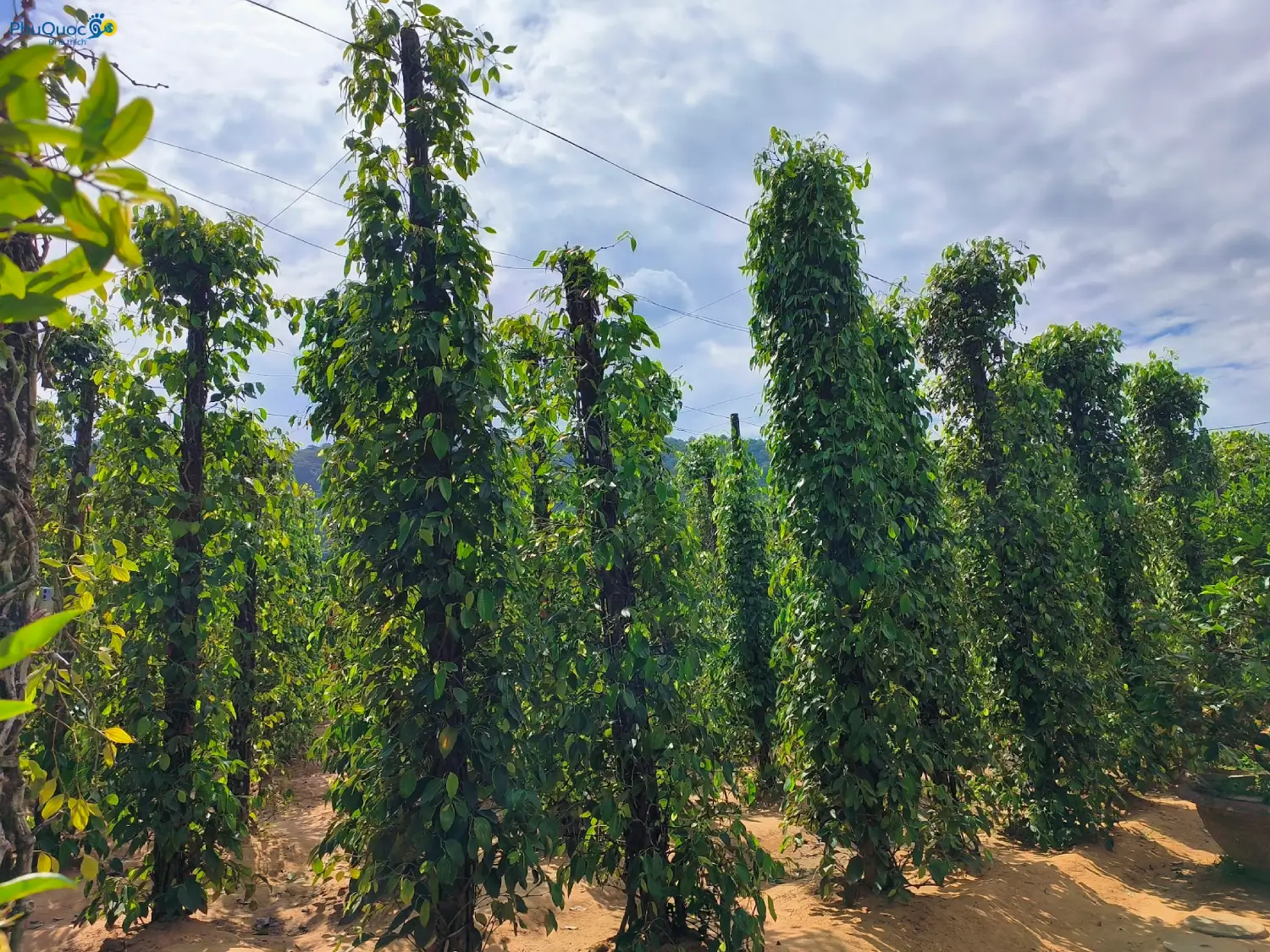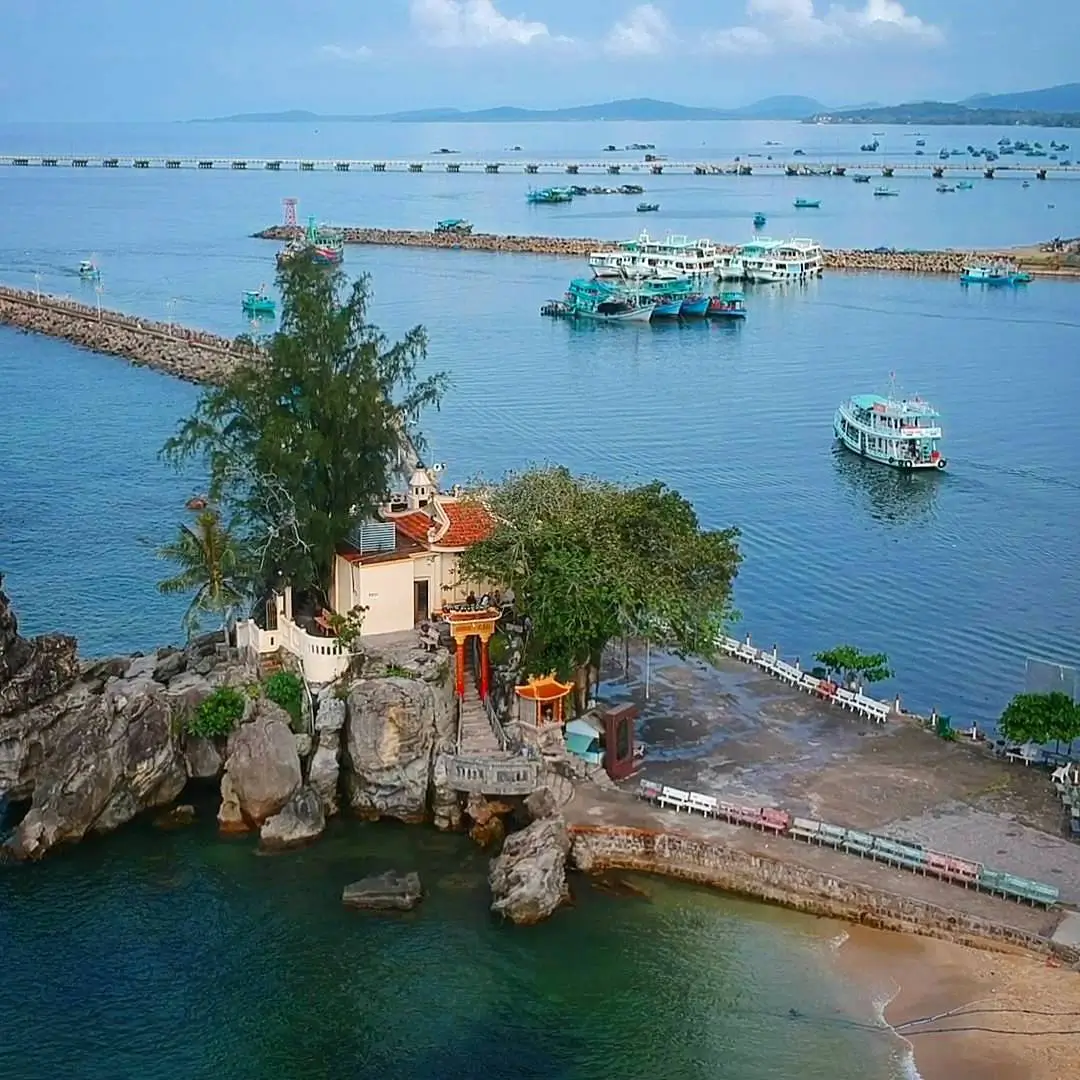


When hearing about Phu Quoc, most travelers immediately think of clear blue beaches, expensive 5-star resorts, or lively entertainment complexes. But with over six years of experience leading jungle trekking tours, I realized a very different side of Phu Quoc: quiet, lush, and extremely pristine, deep within the old-growth forests.
Looking for a change of pace to escape the crowded beaches and immerse yourself in nature? In this article, we will compile in detail the 10 best trekking places in Phu Quoc clearly categorized from easy to difficult, helping you easily choose the most suitable trail for your 2026 trip. We will go through cool, easy streams for beginners, ideal cloud-hunting viewpoints, and mountain climbs to conquer the “Roof of the Pearl Island” that require high physical fitness.
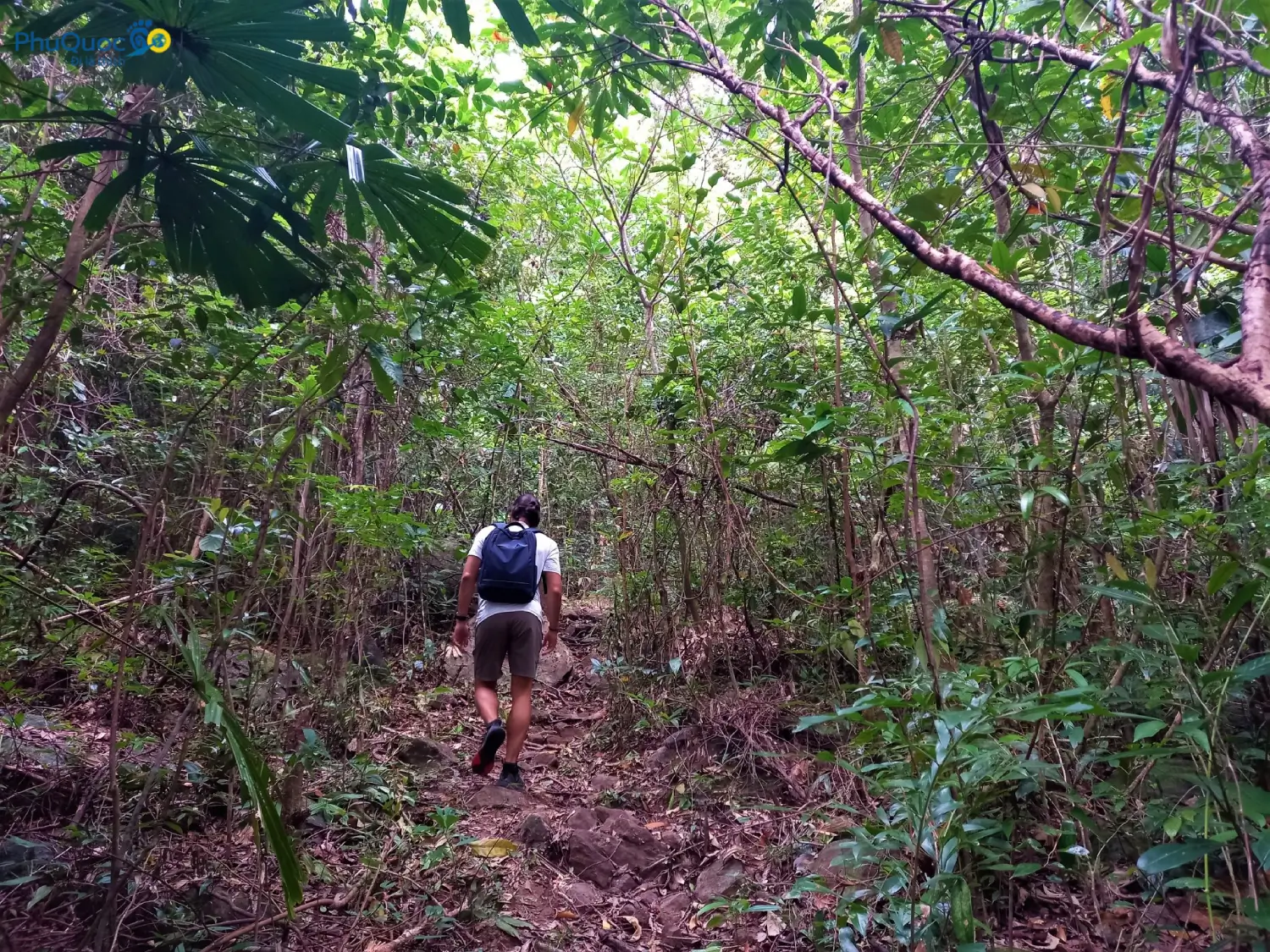
Why should you go trekking in Phu Quoc at least once?
Many independent travelers think that trekking in Phu Quoc is like walking in a park or gentle hiking in Da Lat. The truth is completely different! The Phu Quoc primeval forest ecosystem features sub-equatorial tropical rainforest characteristics: high humidity, paths easily covered by vines, many slippery mossy stream sections, and spotty cell service.
Quite a few groups going on their own using Google Maps have gotten lost, encountered flash floods, or suffered exhaustion on rocky slopes. However, the reward is extremely worthwhile: fresh air filled with phytoncides from forest trees, jade waterfalls untouched by commercial exploitation, and the overwhelming feeling of joy when touching fog-shrouded mountain peaks.
Comparison table of the 10 hottest Phu Quoc trekking trails in 2026
| Location | Difficulty Level | Duration | Highlights |
| Suối Mơ | Easy | 1–2 hours | Gentle stream, shaded forest, suitable for families |
| Suối Đá Bàn | Easy | 2–3 hours | Flat, table-like rocks, easy to stroll |
| Suối Tiên | Gentle | 2–3 hours | Surrounded by rose myrtle forest, poetic scenery |
| Suối Mây | Moderate | 3–4 hours | Wild, cool stream, lesser-known |
| Suối Đá Ngọn | Challenging | 4–5 hours | Conquer 7 majestic waterfall tiers |
| National Park | Moderate | 3–5 hours | Explore diverse primeval forest ecosystem |
| Tiên Sơn Peak | Challenging | 3–4 hours | Viewpoint overlooking South Island forest and sea |
| Mount Đá Bạc Peak | Demanding | 5–6 hours | Steep cliffs, eerie old-growth forest |
| Mount Hàm Ninh | Demanding | 6–7 hours | Cultural heart, sacred atmosphere |
| Mount Chua | Very Hard | 7–9 hours | “Roof of Phu Quoc” (603m), requires good physical fitness |
10 best trekking places in Phu Quoc categorized by difficulty
1. Suối Mơ Phú Quốc – Gentle trekking trail for beginners
If you have never trekked before or are traveling with children, Suối Mơ Phú Quốc is the perfect starting line. The trail is short, the terrain is flat, and it is filled with shade from tropical forest trees.
- Specific information: Location near Cửa Dương area. Free admission. Best time to go is from 8:00 AM – 11:00 AM.
- Real experience: Stepping onto the trail, you will hear the gurgling water mixed with birdsong. The scent of damp humus gently soothes your sense of smell. The water in the natural swimming holes is crystal clear, revealing schools of small fish swimming.
- Local tip: You should wear backstrap sandals with good grip or stream-wading shoes. Avoid going at midday because it gets quite stifling due to high forest humidity.
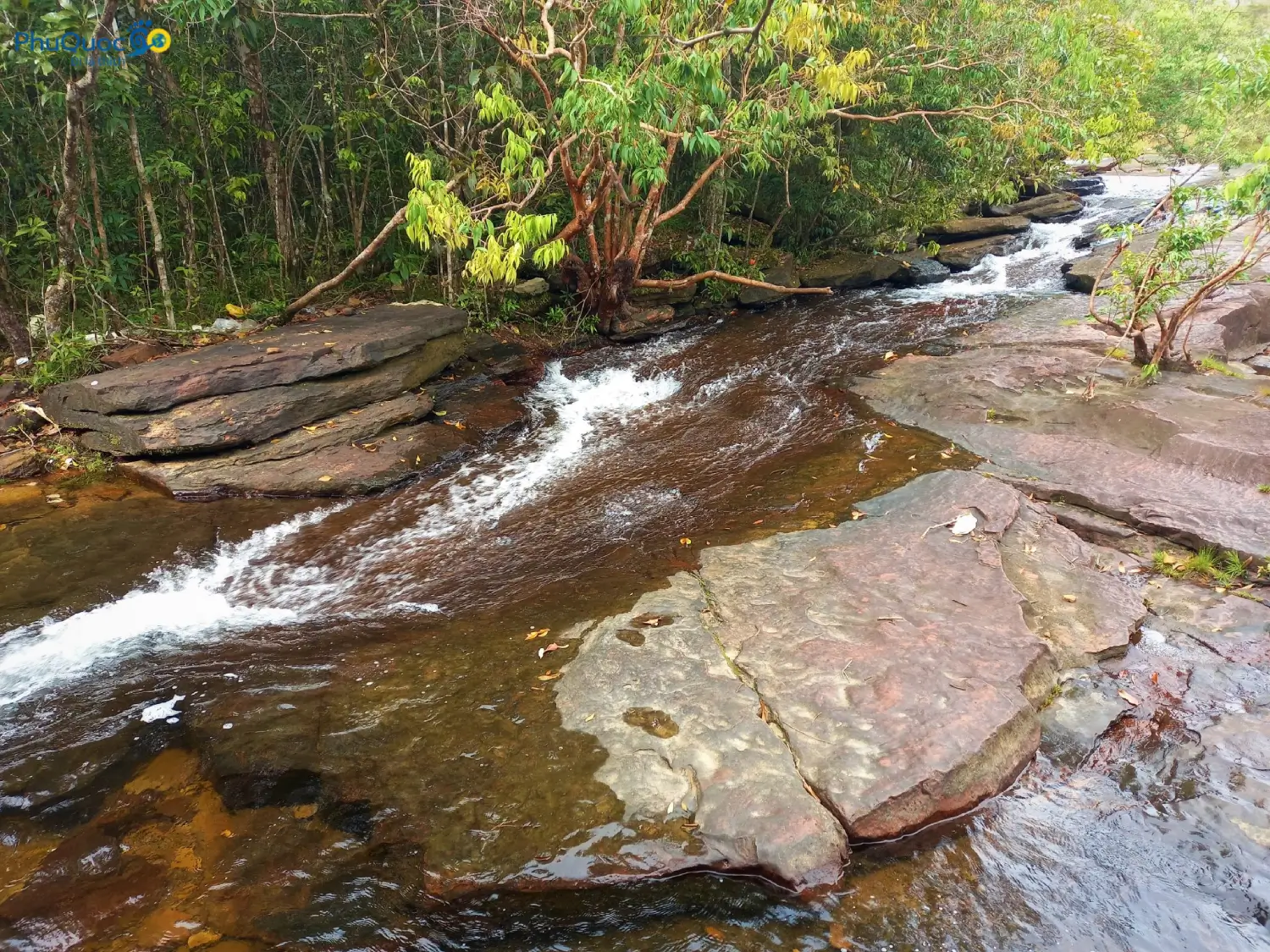
“Local note: Suối Mơ is not overly famous on mass tourism maps, allowing it to preserve its natural quietness. Remember to bring a personal trash bag as there are no sanitation workers cleaning up here.”
2. Suối Đá Bàn Phú Quốc – Flat, shaded pathway
True to its name, Suối Đá Bàn Phú Quốc is famous for countless large, flat boulders lining up like giant stone tables crafted by nature.
- Specific information: Located in Cửa Dương commune, about 10 km from Dương Đông center. Entrance ticket is around $0.4 – $0.8/person.
- Real experience: The Phu Quoc stream trekking journey here is quite relaxing. You will cross a suspension bridge that sways gently before venturing deeper into the stream. Sitting on a large boulder and dipping your feet into the cool water feels extremely pleasant.
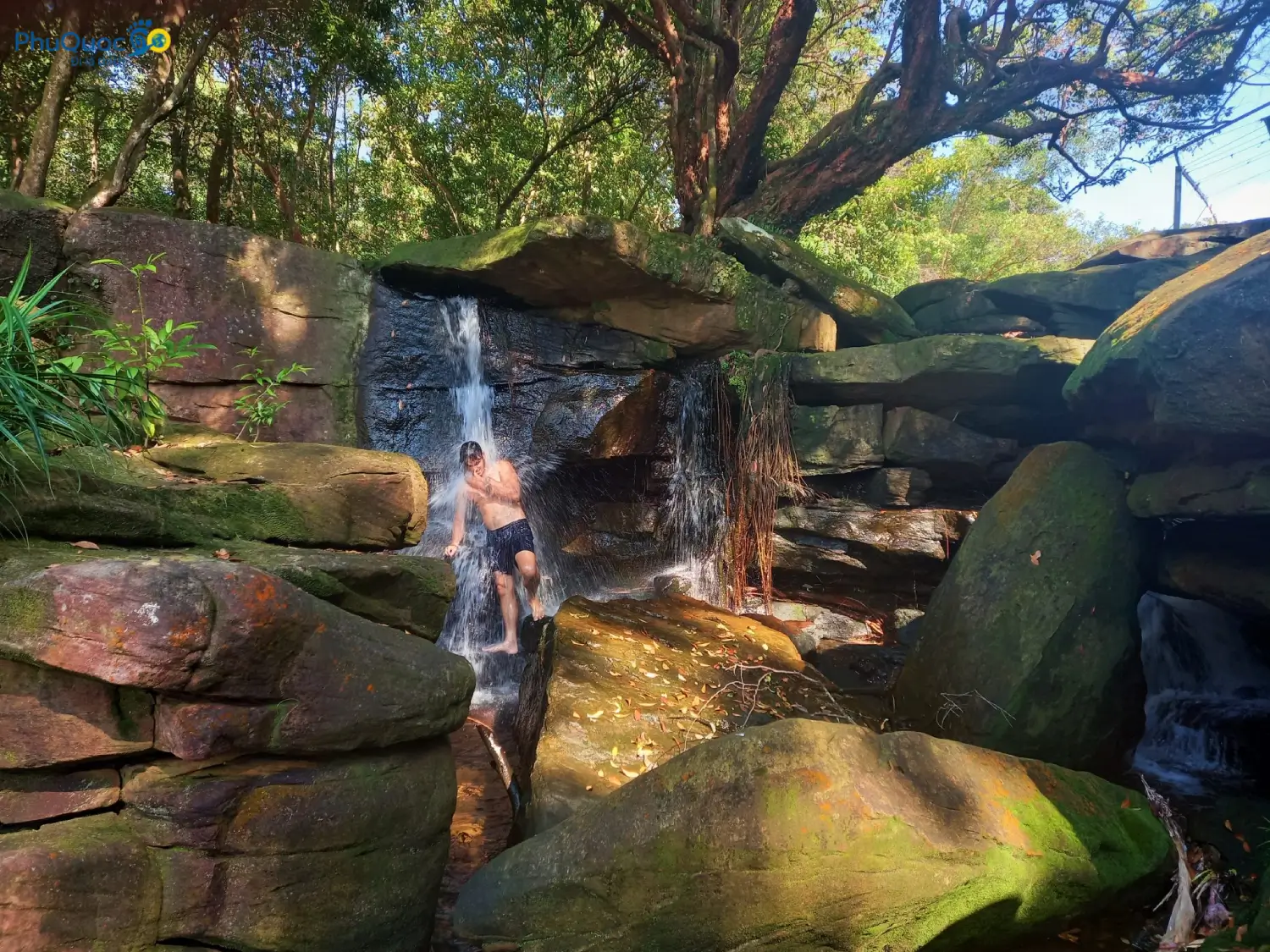
- Local tip: During the rainy season, moss-covered rocks are very slippery. Our experience is to step on rough, dark-stained rock areas or sand-covered spots to avoid slipping.
3. Suối Tiên Phú Quốc – Dreamy trail at the foot of the Hàm Ninh mountain range
Located along the mountain slope, Suối Tiên Phú Quốc offers poetic beauty with dirt paths interwoven through rich vegetation and stretching wild rose myrtle bushes.
- Specific information: Located in Hàm Ninh commune, conveniently accessible from the island center. Perfect for a half-day trip.
- Real experience: The trekking path stretches about 1.5 km leading deep into the forest. The carpet of dry leaves packed underfoot creates a satisfying crunching sound. The air remains cool thanks to old-growth forest trees fully blocking harsh sunlight.
- Local tip: If you visit between December and February, you will encounter ripe wild rose myrtles along both sides of the path. You can pick and enjoy them right on the spot – a unique sweet and tart flavor of the island.
4. Suối Mây Phú Quốc – Wild trail for peaceful souls
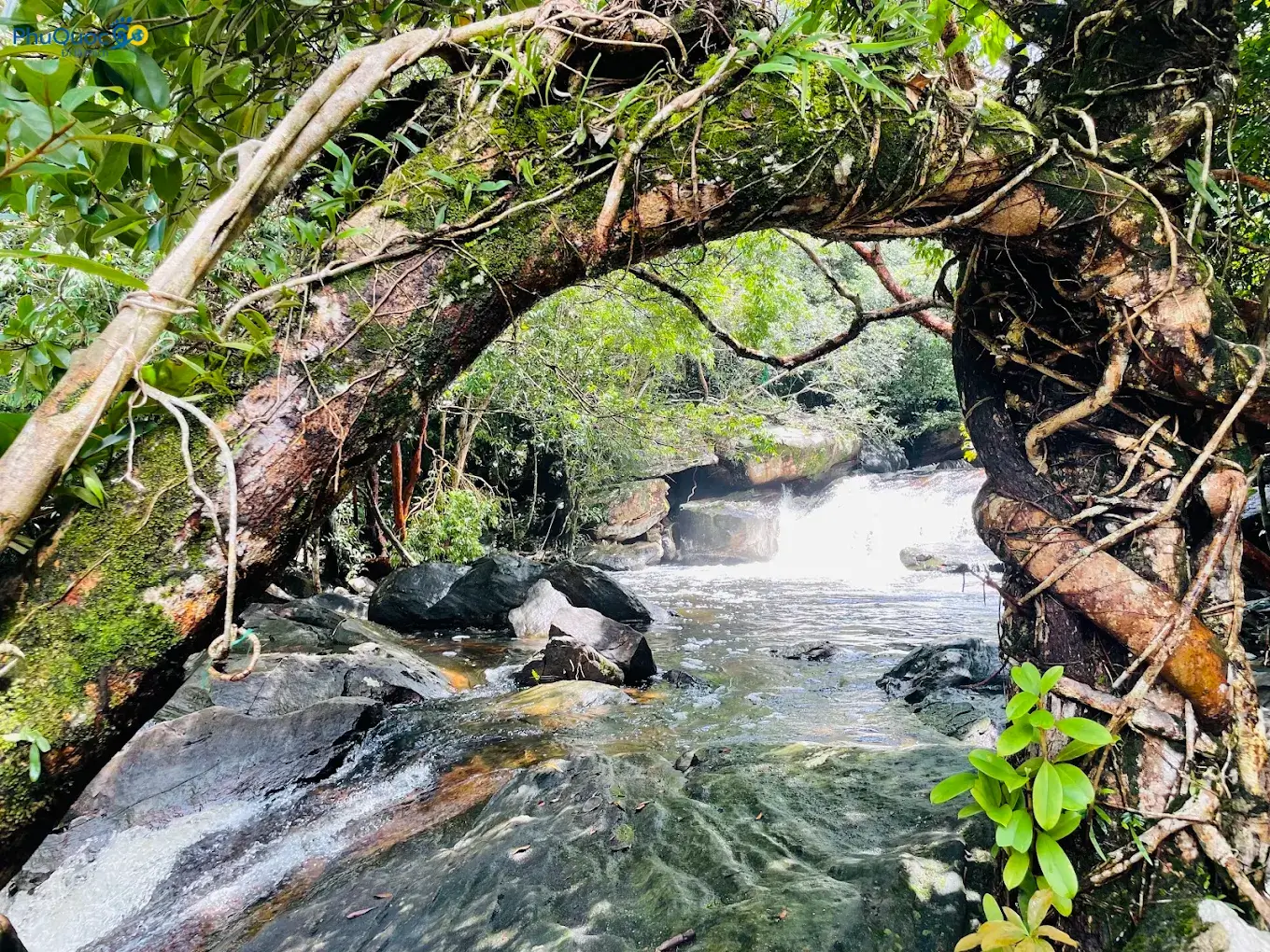
If you are tired of crowded destinations, Suối Mây Phú Quốc is an untouched spot that retains its wild character, having undergone little commercial tourism development.
- Specific information: Located in Suối Mây Hamlet, Dương Tơ commune. The trailhead entrance is relatively hidden.
- Real experience: The route crosses narrow dirt paths requiring you to duck under hanging vines. The deeper you go, the city noise disappears completely, leaving only the wind rustling through leaves and the subterranean stream whispering under the rock beds.
- Local tip: Google Maps coordinates for this area are often inaccurate. You should use a Phu Quoc motorbike rental service to travel to the Dương Đông bypass road, then ask local residents for the turnoff into Suối Mây.
5. Suối Đá Ngọn Phú Quốc – Conquer 7 majestic waterfall tiers
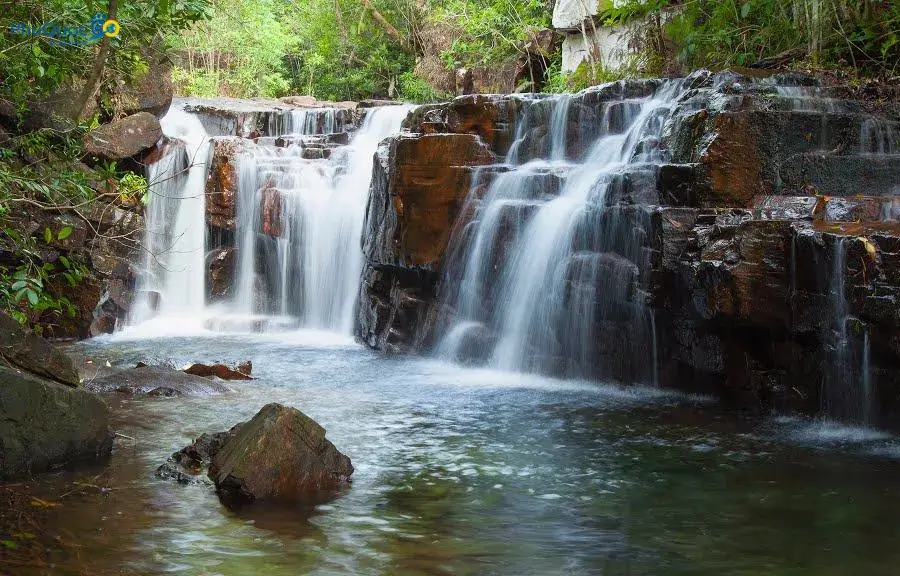
Referred to as the “Jacob Swimmer” of the Pearl Island, Suối Đá Ngọn Phú Quốc is located in the northern part of the island, famous for its 7 waterfall tiers that flow year-round without ever running dry.
- Specific information: Located upstream of the Dương Đông freshwater reservoir. The round-trip trekking route takes about 4–5 hours.
- Real experience: The terrain here is relatively complex, combining climbing over large worn boulders and wading through fast-moving currents. The mist splashing on your face brings an invigorating and thrilling sensation.
- Warning: Never cliff-jump high into water pools without safety ropes and a guide inspecting the water depth. Rocks at Suối Đá Ngọn are extremely sharp due to weathering.
6. Phu Quoc National Park – Crossing wild primeval forest corridors
Phu Quoc National Park covers more than 70% of the island’s area, preserving a rich floral carpet alongside many rare animal species listed in the Red Data Book.
- Specific information: Offers various exploration routes from Bãi Thơm and Gành Dầu to paved roads cutting through the forest.
- Real experience: Trekking through the Phu Quoc primeval forest here, you will witness ancient Melaleuca and hardwood trees clinging tightly to rock cliffs. Occasionally, you may spot monkey troops swinging across high branches or hear hornbill calls echoing throughout the forest canopy.
- Local tip: Bring a small magnifying glass or binoculars if you enjoy observing insects and wild mushrooms. The rainy season from June to September is when Phu Quoc forest mushrooms display their most vibrant forms.
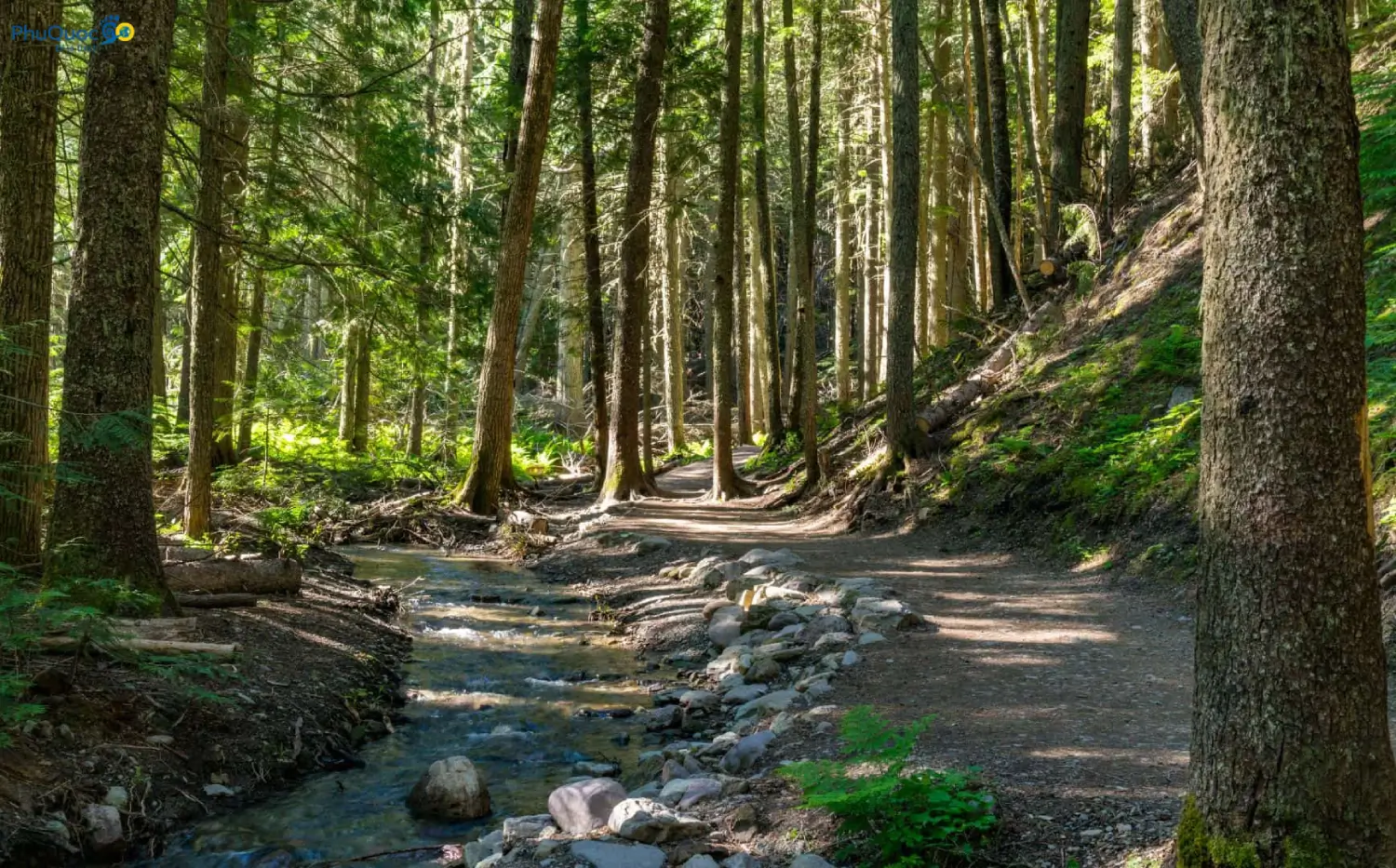
7. Tiên Sơn Peak Phu Quoc – Viewpoint overlooking South Island forest and sea
If you are looking for a beautiful trekking place in Phu Quoc that combines steep climbing challenges with spectacular high-angle views, Tiên Sơn Peak Phu Quoc is the answer.
- Specific information: Altitude around 300 meters above sea level. Steep inclines, travel time takes about 3–4 hours.
- Real experience: The climb is quite steep, with many sections of clay mixed with boulders. Wind blows stronger the higher you ascend. Upon reaching the summit, a panoramic landscape of the South Island with lush green forest stretches out to touch the turquoise ocean.
- Local tip: The steep section near the summit is very easy to slip on if wearing smooth-soled shoes. You need dedicated trekking shoes with high traction lugs and should bring trekking poles.
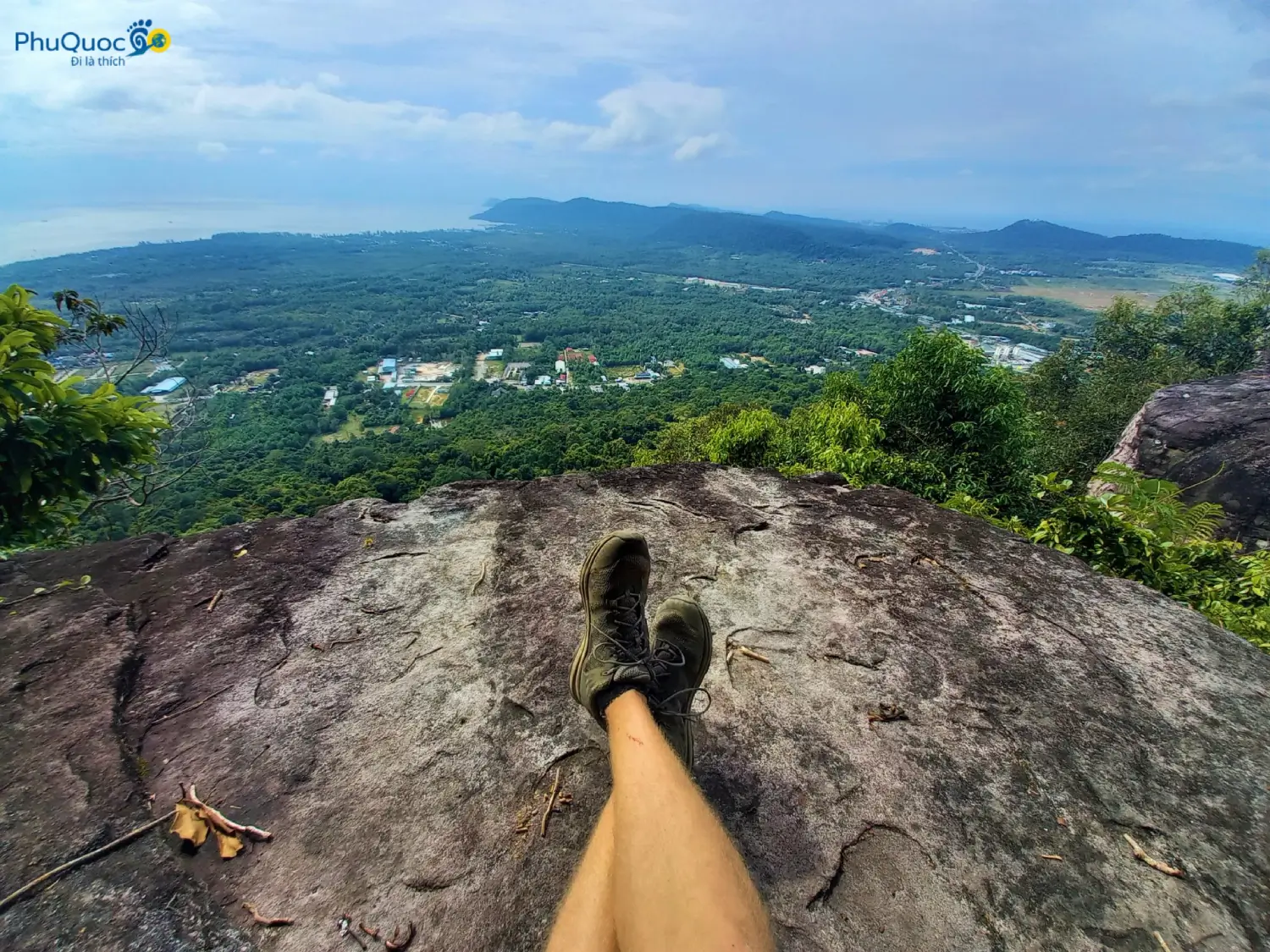
8. Mount Đá Bạc Peak Phu Quoc – Endurance challenge on vertical rock cliffs
Mount Đá Bạc Peak Phu Quoc is reserved for those seeking high-difficulty Phu Quoc mountain trekking experiences that require endurance and courage.
- Specific information: Vertical terrain, with sections requiring you to pull yourself up by tree roots. Duration lasts about 5–6 hours.
- Real experience: The atmosphere along this route is extraordinarily deserted. You will traverse thick leaf-litter layers, moss-covered limestone cliffs, and howling winds through mountain gaps. The stillness is such that you can clearly hear your own breathing.
- Warning: Not suitable for people with cardiovascular issues, high blood pressure, or fear of heights. You must travel in a group of at least 3 people to support one another in emergencies.
9. Mount Hàm Ninh Phu Quoc – Intersection of the Ông Đạo Đụn legend and magnificent nature
The Mount Hàm Ninh range in Phu Quoc is not merely a green patch on the east side of the Pearl Island, but also the cultural “soul” of the locals. This trekking route leads travelers through deep valleys and fog-shrouded rock cliffs to return to the site tied to the legendary story of Ông Đạo Đụn — a recluse who meditated and lived in harmony with wild animals deep in the wilderness.
- Specific information: The trek lasts 6–7 hours. Good physical fitness and an experienced guide are required.
- Real experience: Standing on the summit, breathing in the crisp mountain air, watching clouds drift over boulder formations, and looking out toward the peaceful Hàm Ninh fishing village along the coast feels deeply moving. The combination of rich natural landscapes and local folklore offers a rare depth of experience.
- Local tip: Listen to local tour operators share stories of Ông Đạo Đụn right at rest stops on the mountain – you will appreciate every ancient tree and stream bed along the Hàm Ninh range even more.
10. Mount Chua Phu Quoc – Conquer the 603m “Roof of the Pearl Island”
Located within the Nắm Tay range, Mount Chua Phu Quoc is the highest peak in Phu Quoc (603m). It serves as the ultimate testing ground for any professional trekker visiting the Pearl Island.
- Specific information: A loop circuit requiring 7 to 9 hours of continuous movement across diverse terrain.
- Real experience: Starting on relatively flat dirt trails, followed by a series of continuous steep slope challenges, traversing dense bamboo forests and cliff faces that demand relentless stamina. Touching the summit marker amidst the windy expanse delivers an unforgettable sense of personal victory.
- Important warning: Strictly DO NOT attempt to climb Mount Chua alone. It is mandatory to have a local guide who knows the terrain to lead the way and carry GPS devices/walkie-talkies.
Handbook for independent trekking preparation in Phu Quoc
1. Weather & Ideal season to go
- Dry season (November – April): Sunny weather, dry forest paths, few mosquitoes, ideal for climbing peaks like Mount Chua, Tiên Sơn Peak, or Mount Hàm Ninh. Before going, check the Phu Quoc weather to plan your itinerary accordingly.
- Rainy season (May – October): Streams like Suối Đá Ngọn and Suối Đá Bàn cascade powerfully with water. However, forest paths become slippery, mossy rocks pose hazards, and humidity is high.
2. Essential personal gear
- Trekking shoes: Deep-lugged soles are mandatory (quick-draining types preferred for stream trails).
- Clothing: Thin athletic long pants, stretchy long-sleeve shirts (to avoid scratches from thorns and mosquito bites).
- Hydration & Nutrition: At least 1.5L–2.5L of water per person depending on the trail, plus energy bars and energy gels.
- Medical & Protection: Insect repellent spray (containing DEET), personal bandages, rescue whistle, headlamp.
Exploring Phu Quoc’s nature on foot through trekking will bring you a completely fresh perspective on the island’s raw beauty. Whether you choose gentle gurgling streams or challenging, fog-shrouded mountain peaks, always respect nature and keep yourself safe.
If you do not have much jungle trekking experience or want a safe trip thoughtfully prepared from forest meals to protective gear, check out the Phu Quoc Trekking 2026 itineraries with the experienced local team at Phu Quoc Go!
Frequently Asked Questions (FAQ)
Are there leeches or dangerous insects when trekking in Phu Quoc?
Dry season (November – April): Almost no leeches; just watch out for forest mosquitoes in the late afternoon. Rainy season (May – October): Leeches may appear in damp areas like Suối Đá Ngọn and Suối Tiên. Tip: Apply mosquito/insect repellent spray to socks and ankles, and tuck long pants into socks while trekking.
Can beginners who have never climbed mountains go trekking in Phu Quoc?
Start with routes under 4 km with minimal inclines to let your body adjust to tropical rainforest humidity. Stay away from challenging trails like Mount Chua or Mount Đá Bạc on your first attempt. Travel in groups to help each other maintain a steady walking pace.
What time of year is best for trekking in Phu Quoc?
Dry season: Sunny and dry, non-slippery, clear visibility at viewpoints. However, small streams will have less water. Rainy season: Waterfalls cascade most majestically, but forest paths are slippery. If trekking streams in this season, complete your trip before 2:00 PM to avoid downpours.
Can you trek Phu Quoc on your own, or do you need to hire a local guide?
Safe self-guided routes: Suối Đá Bàn, Suối Tiên, Suối Mơ (clear trails, easy orientation). Mandatory Guide/Porter routes: Mount Chua, Mount Hàm Ninh, Tiên Sơn Peak. Phu Quoc forest is very dense, easy to get disoriented in, and completely lacks mobile phone service.
Do you need a permit or tickets to go trekking in Phu Quoc?
Private/Tourist stream areas: Entrance tickets range from $0.4 to $1.1/person. Core zones of National Park & Mount Chua: Strict conservation areas where visitors must not camp or build fires independently. You should go with local tour operators to register proper procedures.
What clothes and shoes should you wear when trekking in Phu Quoc?
Shoes: Strictly avoid flat, worn sneakers or flip-flops. Choose dedicated trail running shoes or stream-wading shoes. Clothing: Long athletic pants, sweat-wicking T-shirts. Pack 1 set of dry clothes to change into after stream bathing.
Is stream trekking in Phu Quoc dangerous during the rainy season?
Warning signs of incoming flash floods: Stream water suddenly turns muddy (muddy red), many dry tree branches drift downstream, and stream sounds rumble unnaturally. How to handle: Immediately move to higher rock positions or steep stream banks, and never attempt to swim across when water starts rising rapidly.
Can you camp overnight on mountain peaks in Phu Quoc?
Risks: Phu Quoc forests have high humidity, but during the dry season, they catch fire very easily; additionally, nighttime weather on the mountains is quite unpredictable. Advice: Choose day-trip trekking tours. If you want to camp, select wild beaches in the North Island area where pitching tents is permitted.