

When traveling to Phu Quoc, everyone whispers to each other that you must go to Ham Ninh Fishing Village to eat crab for the authentic experience. But I know many first-timers worry about getting watery, hollow crabs, being overcharged, or worse, having live crabs swapped for dead ones in the kitchen.
Don’t worry. This article from our team—tour operators who have spent over six years working on the east coast of Phu Quoc Island—will reveal the true reality of the Ham Ninh crab market in 2026. We will show you how to distinguish male and female crabs biologically, update the latest floor prices at floating rafts and the early morning market, expose three common fraudulent tricks, and share clever local tips so you have the best trip.

Context & Pain Points: Why Is Ham Ninh Crab Famous Yet Easy to Fall into Traps?
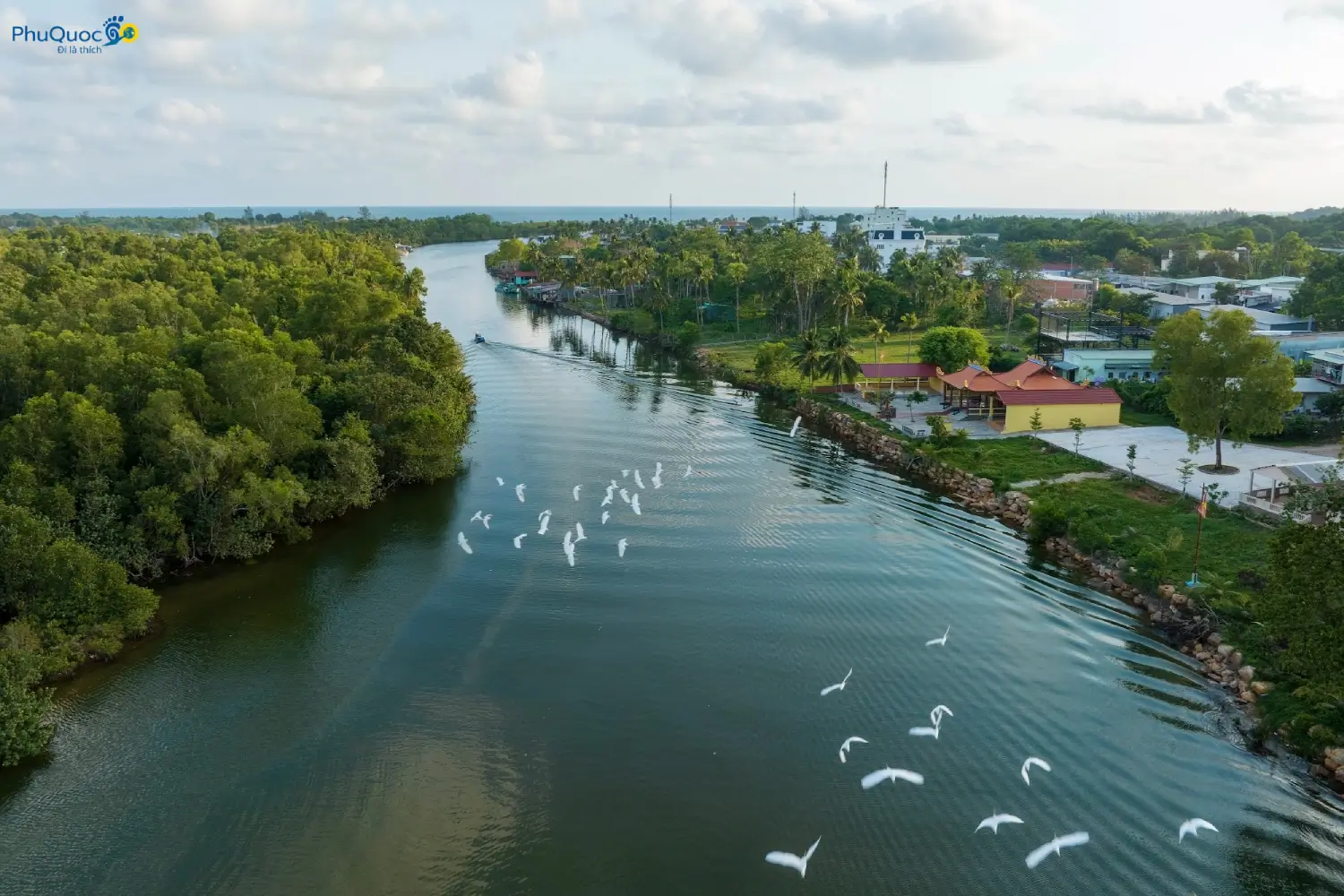
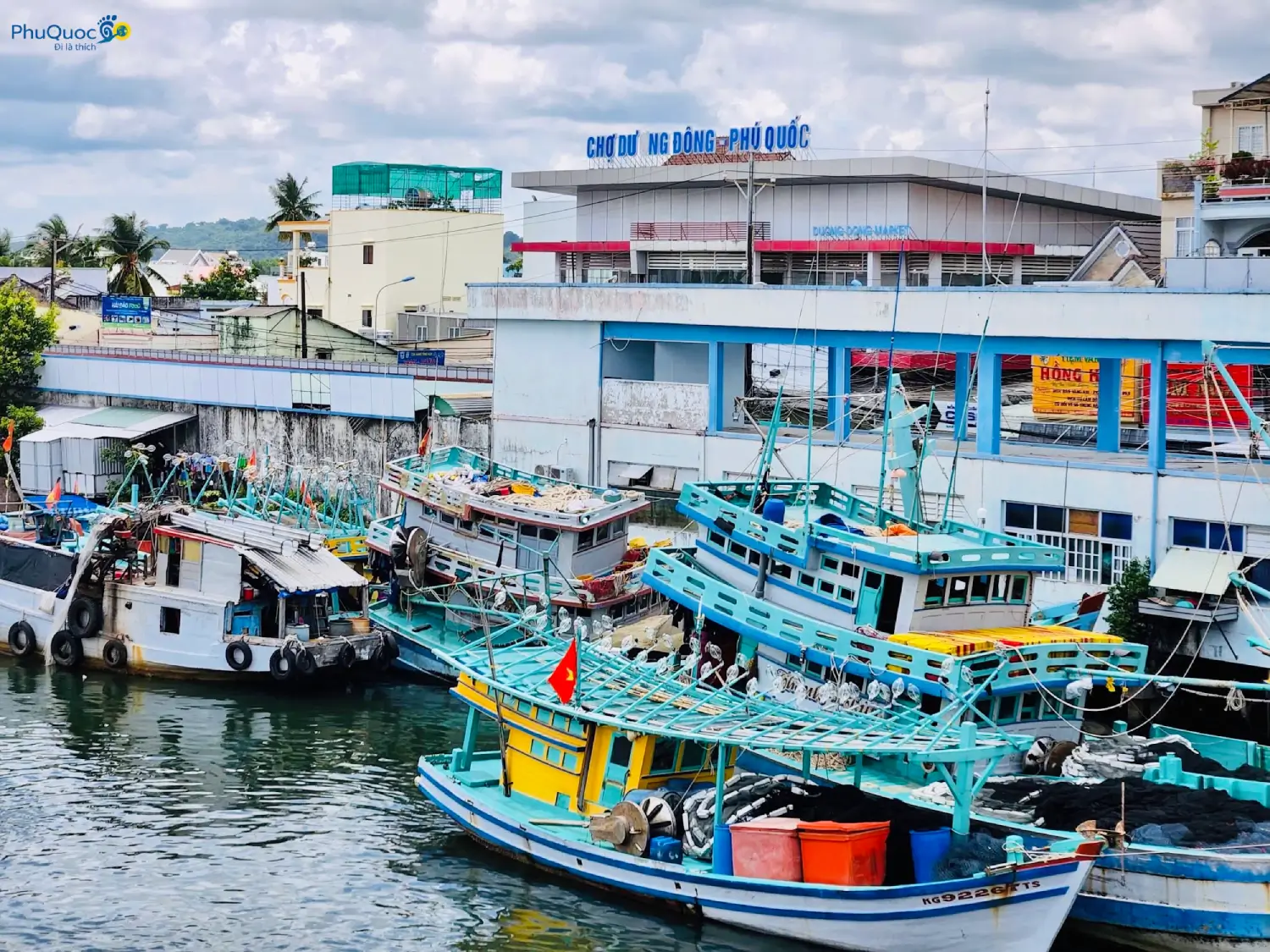
Located on the east coast of Phu Quoc Island, the sea area stretching from Rach Ham and Rach Goc Bridge to near Bai Vong Port has unique salinity and currents. This helps Phu Quoc Ham Ninh crab—though not as large as blue crabs from Phan Thiet or Central Vietnam—have a rich sweet flavor and naturally firm meat unmatched anywhere else.
To state a blunt truth: Ham Ninh crab does not come in huge sizes. If a restaurant sells crabs at 2–3 crabs/kg and claims they are caught in the Ham Ninh reefs, 90% are crabs brought from other sea regions, or thawed street-side frozen crabs meant to deceive your eyes.
Furthermore, fame always comes with a downside. Independent tourists today easily fall trap to taxi and motor-taxi touts soliciting rides from the center of Dương Đông to earn commissions from shady eateries. If you do not prepare crab selection tips and know prices in advance, you can easily end up eating watery, hollow crabs at sky-high prices.
How to Select Firm, Roe-Filled Ham Ninh Crab Based on Biology

To pick good crab, the first thing you must do is understand the biological characteristics of each type rather than just looking with your eyes.
Blue crab (Male) – The #1 choice for meat lovers
If you go to eat crab and want to enjoy firm meat that is sweet in every muscle fiber, choose the male blue crab.
- How to identify: The body has a distinct blue color with tiny star-like white spots on the shell, and two long, tapered claws with neon blue tips.
- Local tip: Flip the crab over and look at the apron (the triangular flap under the belly). Male crabs have a small, narrow Y-shaped apron. Press firmly on the chest area (both sides near the swimming legs); if it feels hard and does not yield, the meat is extremely firm and lean.
Spotted crab / Moss-green crab (Female) – Hunting rich, creamy roe in season
If you are a fan of rich, creamy crab roe, female crabs are your best bet.
- How to identify: The body is moss-brown with a hint of purple, and the carapace is flatter than the male’s. Female crabs have a large, round apron covering most of the belly.
- Local tip: From around November to February of the following year is the season when female crabs carry roe. When selecting, press gently on the round apron; if it feels tight and hard, the roe is full from the chest out to the edges of the shell. Avoid crabs with loose aprons or those carrying a spongy external egg mass (spawning crabs), as their meat has become fibrous and watery, tasting terrible.

2026 Ham Ninh Crab Price Table: Updated from Early Market to Floating Rafts
To avoid being ripped off when eating seafood on the east coast, you need to know the 2026 Ham Ninh crab prices. Prices differ significantly between buying directly at the market and eating at floating raft restaurants (which includes seating, cooking, and service fees).
| Crab Size | Quality Characteristics | Early Market Price | Raft Restaurant Price |
| Small Size (7–8 crabs/kg) | Best size when steamed with beer or lemongrass, sweet meat, soft shell easy to peel. | $6.9 – $8.4 | $10.7 – $12.2 |
| Medium Size (5–6 crabs/kg) | Suitable for families, decently thick meat, uniform size. | $9.5 – $11.4 | $14.5 – $17.1 |
| Large Size (3–4 crabs/kg) | Usually offshore-caught crabs, thick meat, limited daily availability. | $14.5 – $17.1 | $20.9 – $24.7 |
Important note for independent travelers: If you want to personally select crabs from small boats newly arrived at the pier or Hàm Ninh market, you can bring them to large raft restaurants for cooking. Boiling or steaming fees are usually publicly listed from $1.1 – $1.9/kg. This fee includes the specialty salt-pepper-calamansi dipping sauce and Vietnamese coriander side dish, helping you maximize savings.
Exposing 3 Common Scams and Local Tips to Deal with Them
When eating seafood in travel destinations, if you are not careful, you can easily fall for opportunistic tricks. Here are the three most common scams we have gathered:
1. The “dead crab swap” in the kitchen
When you go out to the raft cages to select, staff will let you personally scoop live blue crabs swimming strongly with energetic antennae. But when taken into the kitchen out of view, they will quickly swap them with dead crabs (crabs that recently died at the bottom of the cage kept cold in ice). Dead crabs, when steamed, have mushy, watery meat, shed all swimming legs, and completely lose their rich sweet flavor.
- Local tip: Bring a correction pen (white-out) and make a small mark under the crab’s apron before sending it to the kitchen. Or more simply, ask the raft restaurant to bring out a mini steamer pot and steam them right at your table. Live crabs, when cooked naturally, retain their shape with legs and claws firmly attached, rather than falling off like dead crabs.
2. The “water-soaked rubber band” trick from street vendors
When walking along the pier, you will meet street vendors selling crabs at super low prices (only $4.6 – $5.7/kg for medium sizes). Do not rejoice too soon! Look closely at the rubber bands tying their claws. They use thick rubber bands as wide as a finger, soaked in water and sand to maximize weight. When you buy 1 kg of crab here, 300 g – 400 g is actually the weight of the rubber bands.
- Local tip: Firmly refuse street vendors of unknown origin. If you do buy, demand that all binding bands be cut off before placing the crab on the scale.
3. The “rigged scales” scam at unlicensed pushcarts
Scales at unlicensed carts or unverified small stalls often have altered springs. 1 kg of crab in reality only weighs about 750 g – 800 g when you weigh it back at your hotel.
- Local tip: We advise you to choose large, long-established raft restaurants. They always set up a “verification scale” placed right at the entrance by management or the raft owners. You can personally re-weigh your crabs to check accuracy before paying.
Where to Eat Delicious Ham Ninh Crab? Objective Reviews of 5 Famous Raft Restaurants
To answer the question of where to eat delicious Ham Ninh crab, here is a list of Ham Ninh raft restaurants selling delicious crab along with realistic pros and cons reviewed from diners on Google Maps that we have carefully selected:
Ngọc Hân Floating Raft – A big plus for kindness
This is one of the rafts receiving the most positive feedback regarding service attitude. According to real notes from account Quoc Phan (5 stars): “Everything was good, whatever service requested was provided, even lent a motorbike for sightseeing. Delicious food, affordable prices, fresh sea air. Paper scallops are not available everywhere, and if a crab happens to be hollow, just tell the owner to exchange it.”
- Pros: The owner is extremely kind. If you happen to crack open a watery or un-fresh crab, the restaurant will gladly exchange a new one immediately without a single complaint. Early mornings are quite empty, but quality remains assured, so do not hesitate to walk in.
- Cons: During peak tourist season, dishes arrive somewhat slowly due to heavy crowds.

Hà Quyền Raft – Impressive live seafood tanks
This place owns a spacious area with tanks holding continuously swimming seafood. User Mai Lan Hoang (5 stars) shared: “The owner is very cute, prices are reasonable, not expensive. Herring salad is extremely delicious, fresh crab (large crab $17.1/kg, small crab $5.7/kg depending on purchase time at the raft), Thai-style steamed sea clams, special fried rice, delicious.”
- Pros: Extremely diverse seafood, crabs are clearly categorized in glass tanks. Besides crab, the gỏi cá trích (herring salad) here is rated among the top in Hàm Ninh.
- Cons: Located deep inside, so walking in from the fishing village entrance can be a bit tiring on the feet.

Thảo Nhi Raft – Super chill view of taking-off planes
If you want to eat good crab and get nice photo check-ins, this is a suitable choice. User kim nh Ly (5 stars) reviewed: “Cool view, can watch the sunset and taking-off airplanes, a local spot so prices are casual. Food is diverse and tasty, I ate very fresh crabs, every single one had roe, owner is enthusiastic and sweet.”
- Pros: Prime location, airy space catching sea breezes, overlooking the sunset falling over the East Sea. Female crabs here are carefully selected, so the roe rate is very high.
- Cons: Prices of some side snail dishes are slightly higher than the general average by about 10%.
Tình Biển 2 Seafood Raft – Mixed reviews
An address with a mixed customer base and contrasting reviews you should note. User Dieu Linh Ho (5 stars) praised: “Live seafood swimming around, pick whatever you eat. Two of us ate 1 hotpot, 4 steamed crabs (700 g), 1 plate of snails, fresh oysters, and gỏi cá trích totaling $44.3. Ate until completely full.”
However, user Tuong An Truong Hoang (2 stars) stated frankly: “Acceptable, location is quite far from the center of Dương Đông, food is okay and fresh, but crabs were a bit thin without firm meat.”
- Pros: Overall cost for a family meal is reasonable, with diverse seafood.
- Cons: Crab quality consistency is not very high; visiting on rough sea days easily yields thin crabs with little meat. You need to hand-pick carefully yourself rather than leaving it entirely to staff.
Sơn Trang Quán – Affordable eatery with great quality
An address for those who prefer sitting at a solid shore-based restaurant over floating rafts while keeping prices budget-friendly. User Brian Diec (5 stars) commented: “Inexpensive eatery. Extremely fresh seafood. My lover craved crab; we picked 4 crabs weighing only 600 g, but they had tons of roe and firm meat. We also ate 500 g of sweet snails and a $4.9 seafood rice dish, leaving the two of us stuffed.”
- Pros: Prices for cơm ghẹ Phu Quoc (Phu Quoc crab fried rice) and accompanying seafood dishes are very cheap; staff are enthusiastic and friendly. Though small in size, every crab is firm.
- Cons: Lacks the atmosphere of sitting on bobbing ocean waves like floating rafts, with a more limited ocean view.
Buying Ham Ninh Crab to Take Back to the Mainland: Packing Process and Flight Regulations
Many of you want to buy Ham Ninh crab to bring back as gifts for family. To keep crabs from spoiling after your flight, you must strictly follow this packing process used by Phu Quoc seafood traders:
- Step 1: Choose ice-chilled dead crabs or anesthetized live crabs. Never pack fully active live crabs into sealed styrofoam boxes because they will puncture each other with claws, die, and emit foul odors. Ask the seller to submerge crabs in cold ice water so they enter “hibernation”, then arrange them neatly into the box.
- Step 2: Use specialized ice gel packs. Never use regular ice cubes because as the ice melts, water leaks out and wets the packaging, causing airlines to immediately reject transport. Place gel packs on top of the crabs, cushioned with a plastic layer.
- Step 3: Seal the styrofoam box tightly with tape. Wrap all edges tightly, leaving no small gaps for cold air to escape.
⚠️ Warning from tour operators: According to baggage regulations of both Vietnam Airlines and Vietjet Air, fresh seafood must be transported as checked baggage marked “Perishable Cargo”, never as carry-on in the passenger cabin. Styrofoam boxes must be dry, non-leaking, and odor-free to pass Phu Quoc Airport security.
Conclusion & Pocket Handbook
Although small, Ham Ninh crab boasts a rich, sweet flavor and firm meat that earns it the crown of seafood king on the Pearl Island. As long as you keep in mind how to pick male/female crabs, remember the 2026 floor prices, and apply the “white-out marking” trick, you can confidently enjoy a delicious seafood feast without fear of tourist traps.
To build a perfect itinerary for your self-guided trip, you can refer to our article on Self-Guided Guide to Ham Ninh Fishing Village Phu Quoc for detailed directions and how to combine Southeast Island attractions. Also, don’t forget to update all the latest Phu Quoc travel experiences to avoid overpriced experiences at Phu Quoc Night Market or plan your island adventure with our Phu Quoc 3-Island Tour!
FAQ – Answers to the Toughest Questions When Eating Ham Ninh Crab
Taking a taxi from Dương Đông to Hàm Ninh, driver insists on taking me to his familiar restaurant, should I listen?
This is a "taxi touting" scam to split commission (20% - 30% of the bill). This cost is indirectly calculated into the crab price or dish quality to make up losses. Select a reputable raft restaurant (Ngọc Hân, Thảo Nhi, Hà Quyền...) in advance, and demand the driver take you straight to the door. Firmly refuse if they claim "That place is closed" or "That place is bad lately."
What time of month is best to eat crab? Is crab watery on full moon days?
Strictly avoid eating crab from the 14th to 18th of the lunar month (full moon period). At this time, crabs molt or mate, stop eating, and their meat becomes watery, soft, and hollow. Eat at the beginning of the lunar month (1st–5th) or end (25th–30th). Crabs forage heavily then, so meat is extremely thick, firm, and rich.
Do island tours (like 3–island or 4–island tours) stop by Ham Ninh Fishing Village to eat crab?
Itineraries like the Phu Quoc 3-Island Tour travel by speedboat departing from An Thới Port (South). Meanwhile, Ham Ninh Fishing Village lies on the East Coast, completely opposite. Rent a motorbike or private car to go to Ham Ninh in the afternoon (from 3:00 PM onward) to combine seafood dining with watching the beautiful East Coast sunset.
Crabs are sold everywhere at Phu Quoc Night Market, why travel all the way down to Ham Ninh to eat?
At Phu Quoc Night Market: Mainly mainland crabs shipped over or dead crabs kept on ice for days. Prices are high and meat is mushy, serving mostly strolling tourists. At Ham Ninh: 100% fresh live crabs harvested directly from natural floating net cages in the sea. Meat has a chewy-firm texture and a rich, crisp sweetness.
What should I do if I crack open a crab and find mushy, watery meat right at the raft restaurant?
Do not swallow your frustration! Reputable rafts like Ngọc Hân, Thảo Nhi... have clear seafood warranty policies. Call the manager or owner over immediately, show them the spoiled meat, and request a replacement. Honest establishments will happily exchange it right away at no extra charge.
Should children or people with sensitive stomachs eat steamed crab at Ham Ninh rafts?
Ham Ninh crabs caught live at the raft and steamed immediately are fresh, gentle, and rich in calcium, making them great for young children. However, since seafood has a "cooling" nature in traditional view, remind the kitchen to steam with plenty of lemongrass and ginger, and dip in local Phu Quoc salt-pepper-calamansi to balance flavors and avoid stomach chills.
If I buy live crabs packed in styrofoam boxes checked onto Vietjet/Vietnam Airlines flights, how long do they survive? Will they die along the way?
With ice gel packing and a little oxygen pumped into the plastic bags holding the crabs (if available), crabs maintain hibernation and live well for about 6 to 8 hours. Flight time from Phu Quoc to Hanoi or Ho Chi Minh City takes only 1 to 2 hours; including check-in time, crabs will be completely fresh when you arrive home.
How is Phu Quoc crab fried rice at Ham Ninh different from regular seafood fried rice?
Authentic Ham Ninh-style Phu Quoc crab fried rice uses boiled fresh crab meat, painstakingly hand-shredded by staff. The crab meat is then stir-fried until firm with onions, Ly Son garlic, and aromatic ripe Phu Quoc pepper, before being tossed evenly with golden fried white rice. When eaten, the rice offers a sweet, rich, deeply aromatic crab taste rather than using squid or shrimp like ordinary seafood rice.