

A drop of deep amber, crystal-clear fish sauce freshly extracted from a massive wooden vat gives off a subtle aroma and a naturally rich, savory sweetness from black anchovy protein. Among hundreds of brands on the market, travelers can easily confuse traditional fish sauce with Protected Designation of Origin (PDO) certification with industrially blended varieties. In fact, many people still mistakenly believe that “higher protein content means better flavor,” or face trouble and have to leave dozens of liters of fish sauce behind at the airport due to improper packaging.
This article will help you fully decode the more than 200-year heritage journey of Phú Quốc fish sauce – from the ≥85% anchovy standard and sea salt aged for 60 days to 15 months of uninterrupted fermentation. Beyond being proud that it is the first Vietnamese product to achieve PDO status in the European Union (2012), we also share tips to distinguish authentic from fake sauce, price references at reputable barrelhouses like Khải Hoàn and Phụng Hưng, and the safest styrofoam box packaging standards for air travel.

Amidst the Fish Sauce Maze: Why You Need to Read This Article
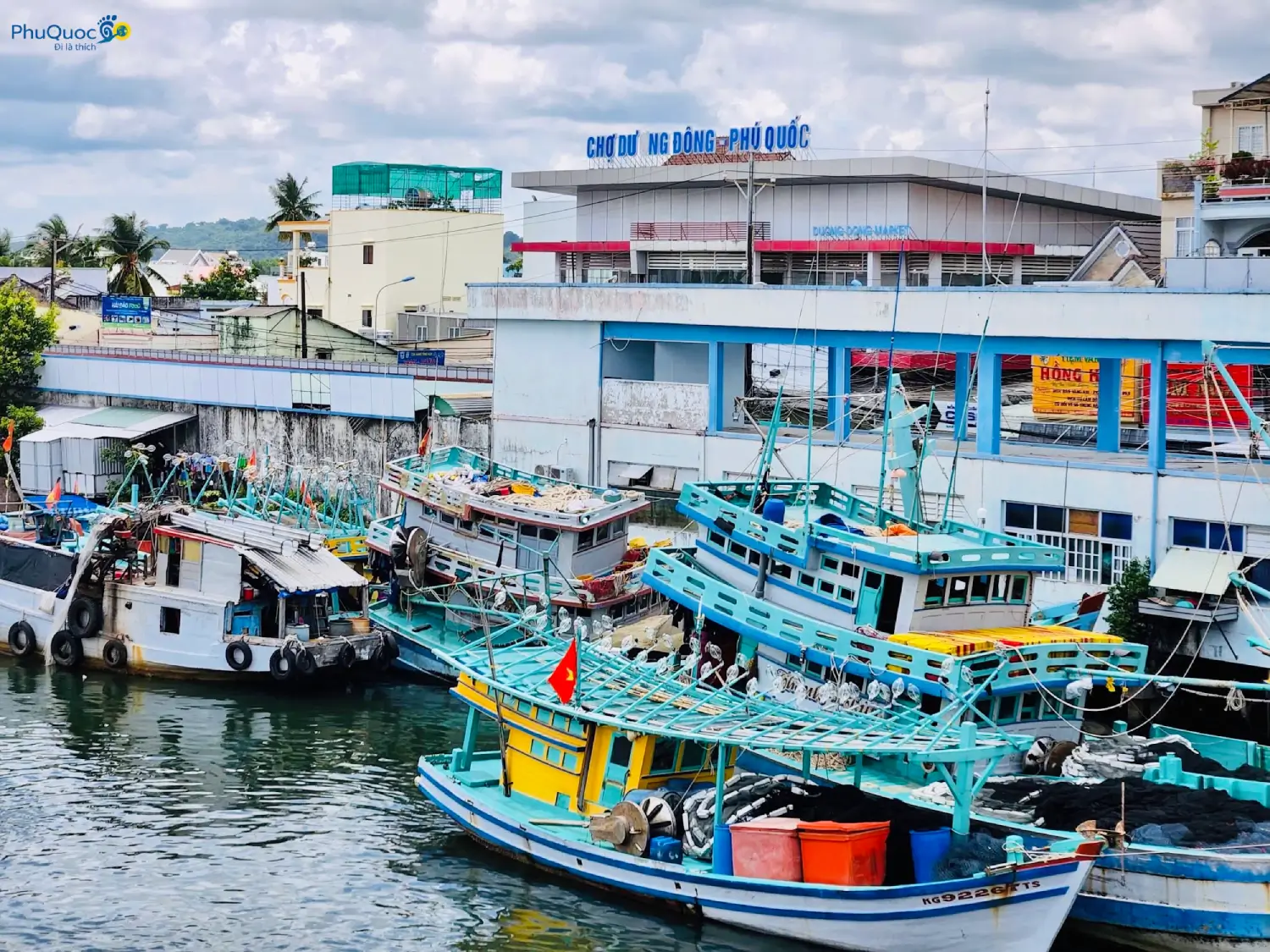
When visiting Pearl Island, bringing back a few pairs of fish sauce bottles as gifts is practically a routine for every family. However, when stopping by Dương Đông Market in Phú Quốc or tourist rest stops, you can easily feel overwhelmed by endless sales pitches with wildly varying prices and protein degrees dancing anywhere from 20, 30, to over 40 degrees. Buying industrial sauce by mistake is frustrating, but buying authentic, delicious sauce only to have the airline refuse it as checked baggage because of incorrect packaging is a painful waste of money. Read on to pick up the insider secrets to selecting a true “national soul” bottle of fish sauce.
A Look Back in History: Over 200 Years Keeping the Phú Quốc Fish Sauce Craft Alive
The craft of fermenting fish sauce has been tied to the land reclamation process and historical depth of Phú Quốc, persistently enduring for over two centuries. Before 1945, fish sauce factories were located mostly along the Cửa Cạn River and the center of Dương Đông Ward in Phú Quốc. After 1946, to facilitate trade and scale up production, factories gradually moved to Dương Đông and An Thới Port. Today, over 80 traditional production facilities still tirelessly preserve the craft, creating a cultural ecosystem steeped in local identity.

3 Key Pieces Shaping the Taste of Europe-Famed PDO Protected Designation of Origin
In 2012, Phú Quốc fish sauce officially became the first Vietnamese product granted Protected Designation of Origin (PDO) status by the European Union (EU) – expanding globally through the EVFTA agreement. Prior to that, in 2001, it was granted protection certificate No. 00001 in Vietnam by the National Office of Intellectual Property. This prestige comes from three unshakeable principles:
Engraulidae Family Anchovies & The Golden Ratio of at Least 85%
Not just any fish species can yield delicious fish sauce. Locals only use black anchovies, pepper-striped anchovies, lead powder anchovies, and red anchovies caught in the Gulf of Thailand (waters off Kiên Giang and Cà Mau). To maintain peak freshness, fish must be scooped with nets, hauled up, and salted immediately right on the boat deck. Notably, anchovies must account for at least 85% of the raw ingredients.

Sea Salt Grains “Hibernating” for 60 Days
Traditional fish sauce uses sea salt harvested from Bà Rịa – Vũng Tàu or Phan Thiết. However, the brought-in salt is strictly never used for fermentation right away.
Pro artisan tip: Salt must be elevated on platforms at least 15 cm off the ground and allowed to “hibernate” for a minimum of 60 days. This process lets acrid, bitter impurities drain away completely, leaving behind the cleanest salty flavor for natural fermentation.
Massive Wooden Vats Fermenting for 12 to 15 Months
Fermentation barrels are handcrafted from specialized woods like Hộ phát, bời lời, sao, vên vên, and quỷnh… which are never attacked by termites. Each vat has a massive capacity of 12 to 15 tons of raw materials. Fish and salt are tightly pressed and left undisturbed so natural enzyme systems can break down proteins continuously over 12–15 months. Making fish sauce is truly an art of patience, waiting until careful extraction and blending between first-draw sauce (nước mắm cốt) and second-draw sauce (mắm long) produce a rich, deep amber masterpiece.
Debunking the Myth: Is “Higher Protein Content Always Tastier” Really True?
This is the most common misconception. According to PDO documentation, the standard protein content of Phú Quốc fish sauce ranges from 20 to 43 gN/liter (Grade 3: 20 degrees, Grade 2: 25 degrees, Grade 1: 30 degrees, Premium: 35 degrees, Special: 40-43 degrees).
- The truth from locals: A bottle of 43-degree protein fish sauce is not necessarily better suited to your family’s palate than a 30-degree bottle. True quality is determined by the amino acid nitrogen content (which creates a rich, sweet aftertaste), sensory balance (a signature subtle aroma), and the anchovy ratio. Do not chase industrial “super-high protein” numbers while ignoring authentic value.
Top 4 Traditional Phú Quốc Fish Sauce Brands Most Worth Buying
To avoid buying low-quality blended products, you should visit Phú Quốc fish sauce barrelhouses to sample and purchase directly at the factory:
- Khải Hoàn Fish Sauce: A century-old brand located on Hùng Vương Street (Dương Đông). Famous for its premium 40–43 degree protein line. (Reference price: $6.7 – $9.1 / box of two 520ml bottles).
- Phụng Hưng Fish Sauce: Headquartered in An Thới Ward. The sauce features a mild saltiness and a remarkably appealing reddish-brown color. (Reference price: $6.5 – $8.4 / box of two 500ml bottles).
- Thịnh Phát Fish Sauce: Located on Đường 30 (Dương Đông), this facility strictly maintains traditional fermentation practices. The sauce has a deep red color and a harmonious salty-sweet flavor. (Reference price: $6.1 – $8.4).
- Thành Khoa & Hưng Thịnh Fish Sauce: Also long-standing, reputable brands in Dương Tơ and Dương Đông, offering a wide range of products from 35 to 40 degrees of protein suitable for both cooking and gifting.
Note: Actual prices may vary depending on the time of purchase. When buying as gifts, glass bottles are preferred for optimal preservation, but if weight is a concern, plastic bottles remain a practical solution.
Essential Airline Packing Tips for Phú Quốc Fish Sauce
Airlines maintain extremely strict controls on odorous liquids. Many travelers have wept tears of regret after having to leave expensive boxes of fish sauce behind right at airport security simply because they were unfamiliar with transport regulations.
- Carry-on baggage: Strictly forbidden. All airlines refuse to allow fish sauce or odorous liquids into the passenger cabin to safeguard shared air space.
- Checked baggage:
- Allowed bottle types: Airlines only accept fish sauce stored in specialized plastic bottles, tightly sealed, and subject to volume limits (usually a maximum of 3 to 4 liters per passenger, depending on airline policies).
- Glass bottle warning: Most airlines refuse to transport glass bottles in checked luggage due to the risk of impact, cracking, and breaking, which damages your baggage and that of surrounding passengers.
- The local way to handle it: Do not pack fish sauce yourself at your hotel. If you intend to fly, choose plastic bottles, purchase them directly at reputable barrelhouses, and ask the staff: “Please pack this in a styrofoam box for air travel.” Factory staff will insert shock-absorbing foam, arrange the bottles in dedicated styrofoam boxes, and seal them securely with tape in no time, ensuring full compliance for safe checked baggage check-in.

Wrapping Up the Journey of a Flavorful Drop of Fish Sauce
Phú Quốc fish sauce is not merely a seasoning; it is the sweat of heritage. It would be a true shame if you sat watching the sunset at Dinh Cậu in Phú Quốc, enjoying a savory bowl of Phú Quốc bún kèn, or rolling a piece of Phú Quốc herring salad (gỏi cá trích) with wild greens without a small dipping bowl of salty, pure first-draw fish sauce. Even just squeezing a bit of lime and pepper to dip the meat of Hàm Ninh flower crab in Phú Quốc and grilled Phú Quốc sea urchin with scallion oil is enough to create an explosion of flavors.
On your upcoming self-guided trip to Phú Quốc, or during your Phú Quốc 3-island tour excursion, take 30 minutes to drop by a traditional barrelhouse. Breathing in the subtle scent of fish sauce carried on the ocean breeze, you will understand why this proud drop of Vietnamese craft has made its way to Western shores!
Frequently Asked Questions (FAQ) About Phú Quốc Fish Sauce
How can I identify authentic traditional Phú Quốc fish sauce?
Read the ingredient list carefully. Authentic fish sauce contains only two ingredients: anchovies and sea salt. It absolutely contains no flavor enhancers (MSG), preservatives, or artificial coloring agents. When held up to sunlight, real sauce exhibits a deep amber color and crystal clarity.
Why does the fish sauce at my home have a harsh, slightly ammoniacal odor?
During fermentation, if fish is not salted immediately on the boat or if the salt ratio fails to inhibit bacteria, amino acid protein degrades into putrid protein (ammonia). A standard bottle of Phú Quốc fish sauce has only a gentle, rich, and sweet aroma, never harsh on the nose.
How does Phú Quốc fish sauce exported to the EU differ from products sold domestically?
The only difference usually lies in packaging specifications, European-standard multilingual labels, and passing stricter international food safety inspections. The essential quality of the pure first-draw fish sauce inside the bottle is identical.
Can I buy plastic–bottled fish sauce to carry back more lightly?
However, plastic bottles are best suited for short-term consumption (3–6 months). If you plan to buy it as a formal gift or intend to store the sauce long-term for over a year without quality degradation, glass bottles or ceramic jars remain the optimal choice.
Is fish sauce spoiled if salt crystals settle at the bottom of the bottle?
Authentic fish sauce is fermented with a high saturated salt ratio to preserve natural fish protein. When the ambient temperature drops (for example, when taken to Northern Vietnam during winter), salt automatically crystallizes at the bottom. Simply shake the bottle gently before pouring or use it with complete confidence—the protein content remains entirely intact.