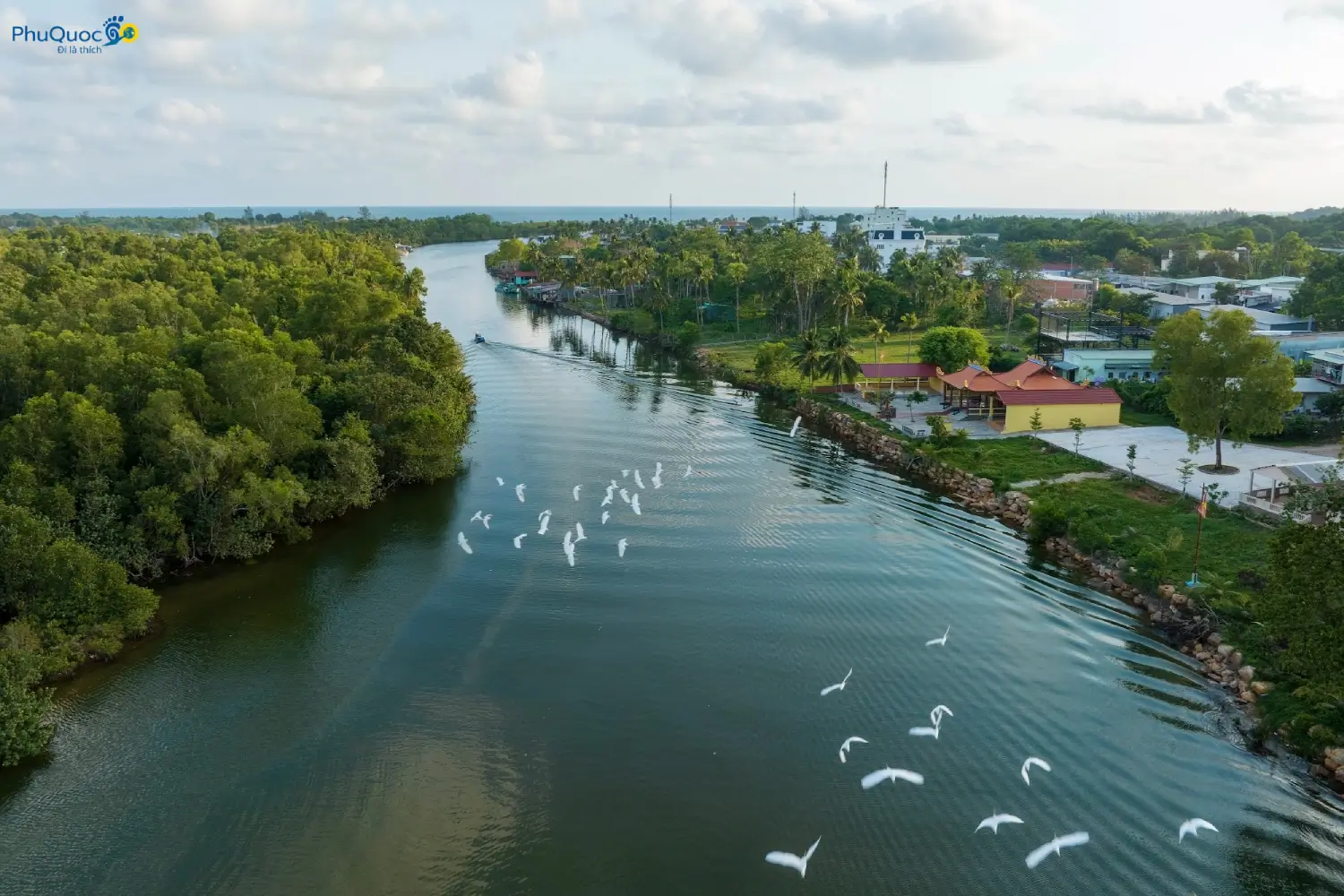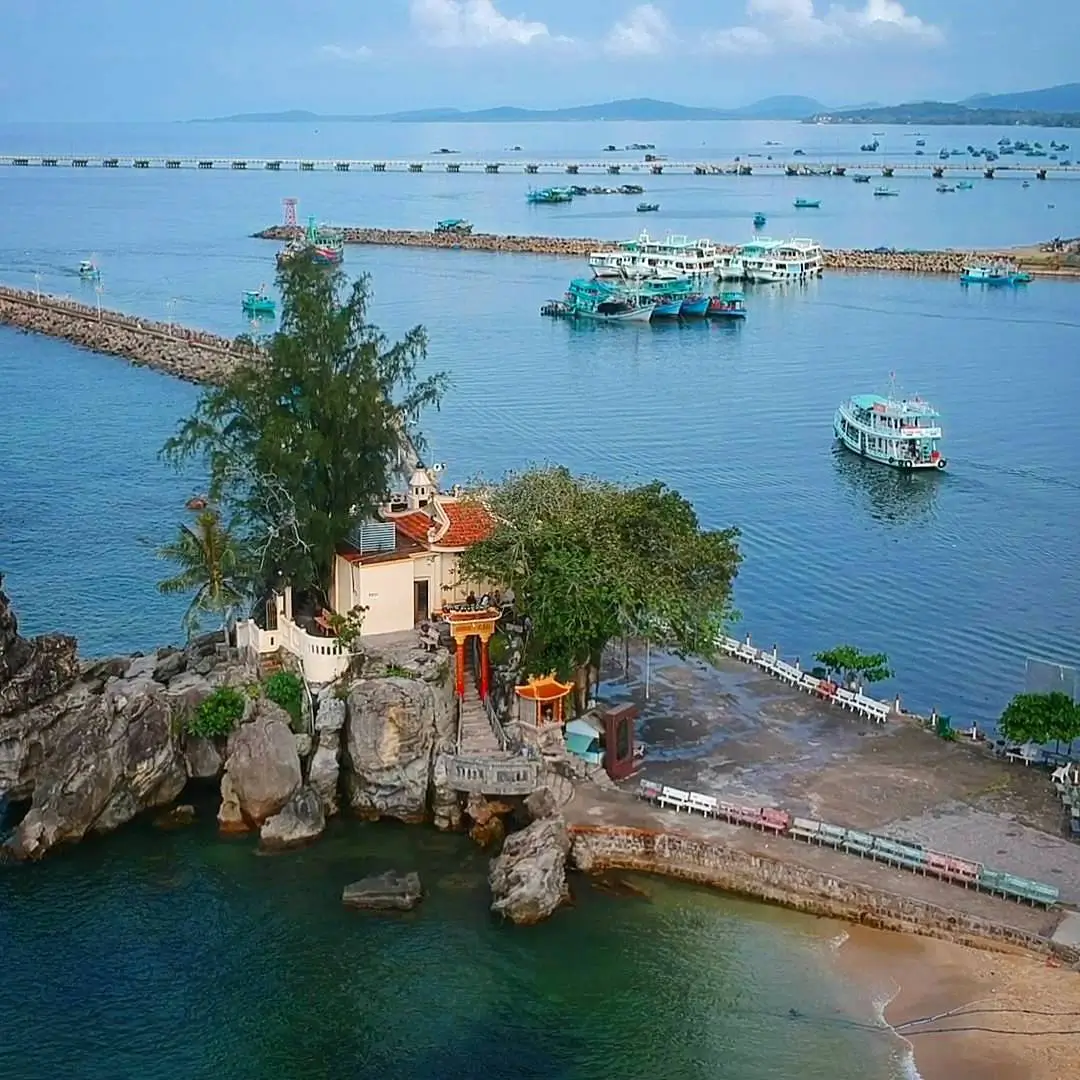


Many travelers heading to Phu Quoc often think immediately of white-sand beaches, golden sunshine, luxury resorts, or fresh seafood. However, if you have never set foot beneath the canopy of centuries-old trees and breathed in the air filled with negative ions in the Phu Quoc primeval forest, you have unintentionally missed half of the Pearl Island’s most pristine soul.
However, trekking in the jungle is not as simple as taking a city stroll. Which season has no leeches? Where do you start to avoid getting lost? Which trail is suitable for families with young children, and which one is strictly for thrill-seekers?
With over six years of experience operating experiential tours and accompanying thousands of guests through the Phu Quoc jungle, our team will answer all your questions in this article. We provide full details on trekking trail maps, costs, survival tips, and practical local advice to help you have the safest, most complete trip.

Context & Pain Points: Why You Need to Read This Article Before Entering the Jungle
Every year, our team receives quite a few “rescue” calls from self-sufficient travel groups. Most people make common mistakes:
- Underestimating the terrain: At first glance, the trail looks fairly flat, but venturing deeper reveals slippery mossy rocky slopes, blocking vines, or fast-flowing streams during the rainy season.
- Choosing the wrong time: Picking the stormy rainy season (July to September), when stream levels rise and mosquitoes and leeches surge, turns an “experience” into a “struggle.”
- Lacking local information: Entering special-use forest areas under management without prior notice, or not knowing rest spots with clean water sources.
In reality, the managed area of Phu Quoc National Park reaches up to 36,262 hectares (including nearly 29,600 hectares of special-use forest), spanning multiple communes from North Phu Quoc Island to the Northeast, such as Gành Dầu, Cửa Cạn, Cửa Dương, Bãi Thơm, Hàm Ninh, and Dương Tơ. If you do not clearly understand the routes and features of each trail, you can easily waste time without experiencing the true value of the primary forest.
What Is Special About Phu Quoc Primeval Forest? The “Green Lung” in the Middle of the Ocean
Phu Quoc is one of the very few tourist islands in Vietnam that still retains a large, relatively intact primeval forest complex.
1. Unique Tropical Island Ecosystem
Recognized by UNESCO as the Kien Giang World Biosphere Reserve in 2006, Phu Quoc’s forest possesses extremely rich vegetation. Forest covers about 70% of the entire island area with several characteristic habitats:
- Evergreen broadleaf forest: Home to giant centuries-old trees belonging to the Dipterocarpaceae, Lauraceae, and Fagaceae families…
- Melaleuca & mangrove forest: Found along streams and estuaries, where freshwater and saltwater mix.
- Characteristic vegetation: Grasslands, myrtle shrubs, thorny brush, and rare wild orchids.
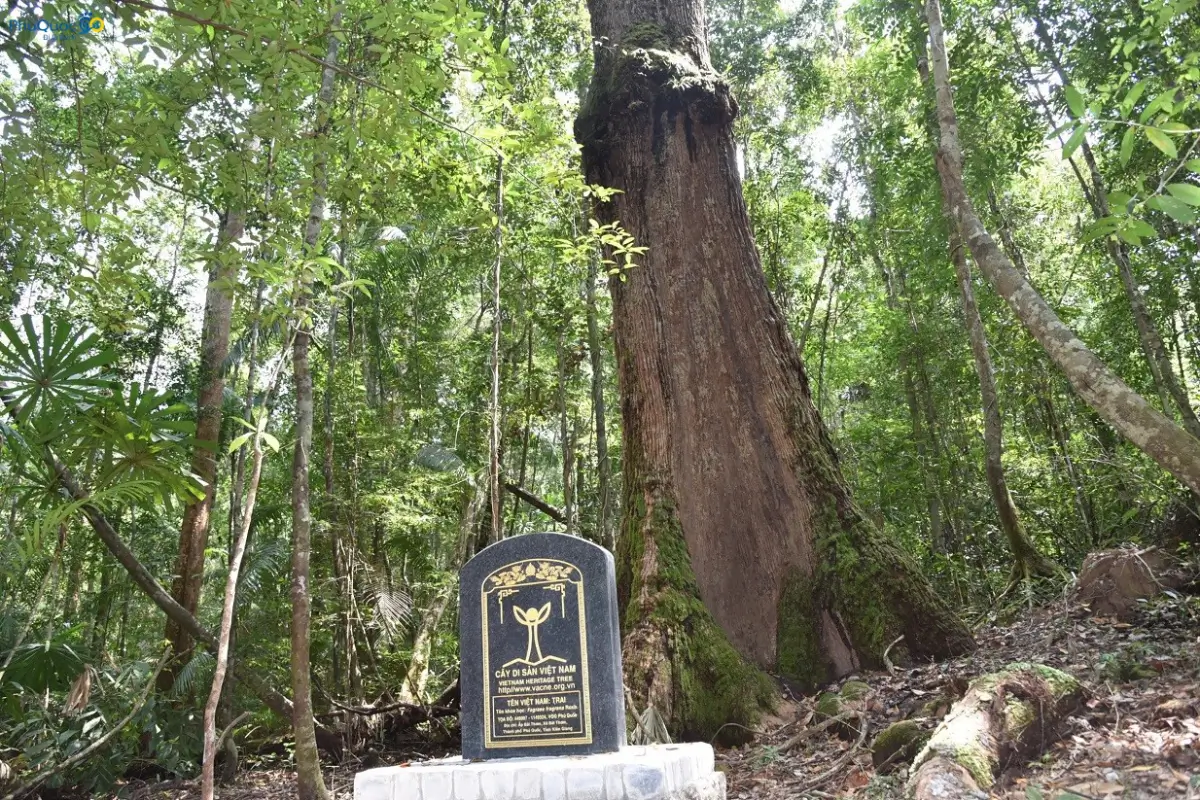
Multi-sensory experience: Stepping through the forest entrance, the temperature drops instantly by 2 to 4°C compared to outside. You will sense the moist scent of decaying leaf litter, faint fragrances of wild flowers, the hum of cicadas, and the trickling sound of streams flowing through rock crevices.
2. “Home” to Thousands of Plant and Animal Species
According to biological survey data, this area records over 1,100 plant species and hundreds of animal species (birds, reptiles, amphibians, insects). Many species are listed in the Vietnam Red Data Book, such as Assam macaques, silvered langurs, reticulated pythons, and endemic wild orchids…
Best Season for Trekking in Phu Quoc Primeval Forest
Phu Quoc’s forest climate is divided into two distinct seasons. Choosing the right timing determines up to 80% of your trekking success.
| Criteria | Dry Season (November – April) | Rainy Season (May – October) |
| Weather | Dry, pleasantly sunny and cool | Rain showers, slippery paths |
| Streams | Crystal clear, moderate water flow | High water levels, fast-flowing currents |
| Features | Safe trails, few mosquitoes/leeches | Lush green vegetation, abundant mushrooms |
| Verdict | Most ideal for trekking | Requires Guide & professional gear |
- Dry season (November to April): The most perfect time. Sunlight filtering through the canopy creates shimmering beams of light, trails are dry, and streams flow gently, perfect for stream bathing and picnics. Check out our Phu Quoc Weather Guide to pick a week with great weather.
- Rainy season (May to October): The forest wears a deep green hue full of life, and waterfalls cascade with white water. However, paths are extremely slippery, rocks are covered in moss, and leeches are active. If traveling during this season, you must go with a local guide.
Top 4 Phu Quoc Primeval Forest Trekking Trails from Easy to Challenging
Depending on your physical fitness and trip duration, you can choose one of the four trails below:
1. National Park Central Trail Route (Easy – Suitable for Families & Beginners)
- Length: ~4 km (round trip)
- Duration: 2 – 3 hours
- Features: Relatively flat and easy-to-walk trail, with dense trees on both sides blocking direct sunlight.
- Experience: You will see massive centuries-old tree trunks taking several people to hug around, with huge vines hanging down like in an adventure movie. This is a safe choice if you travel with young children or seniors looking to breathe in fresh jungle air.
2. Suối Tranh & Suối Đá Bàn Discovery Trail (Moderate – Stream Bathing & Picnic)
- Length: 3 – 5 km
- Duration: 3 – 4 hours
- Experience:
- The Suối Tranh Phu Quoc route is very easy to walk, featuring partially paved paths, making it suitable for strolling while admiring cascading waterfalls.
- The Suối Đá Bàn Phu Quoc route is wilder, with massive flat boulders laid out sequentially like tabletops. Wading upstream along Suối Đá Bàn beneath the primary forest canopy is an extremely refreshing experience on hot sunny days.
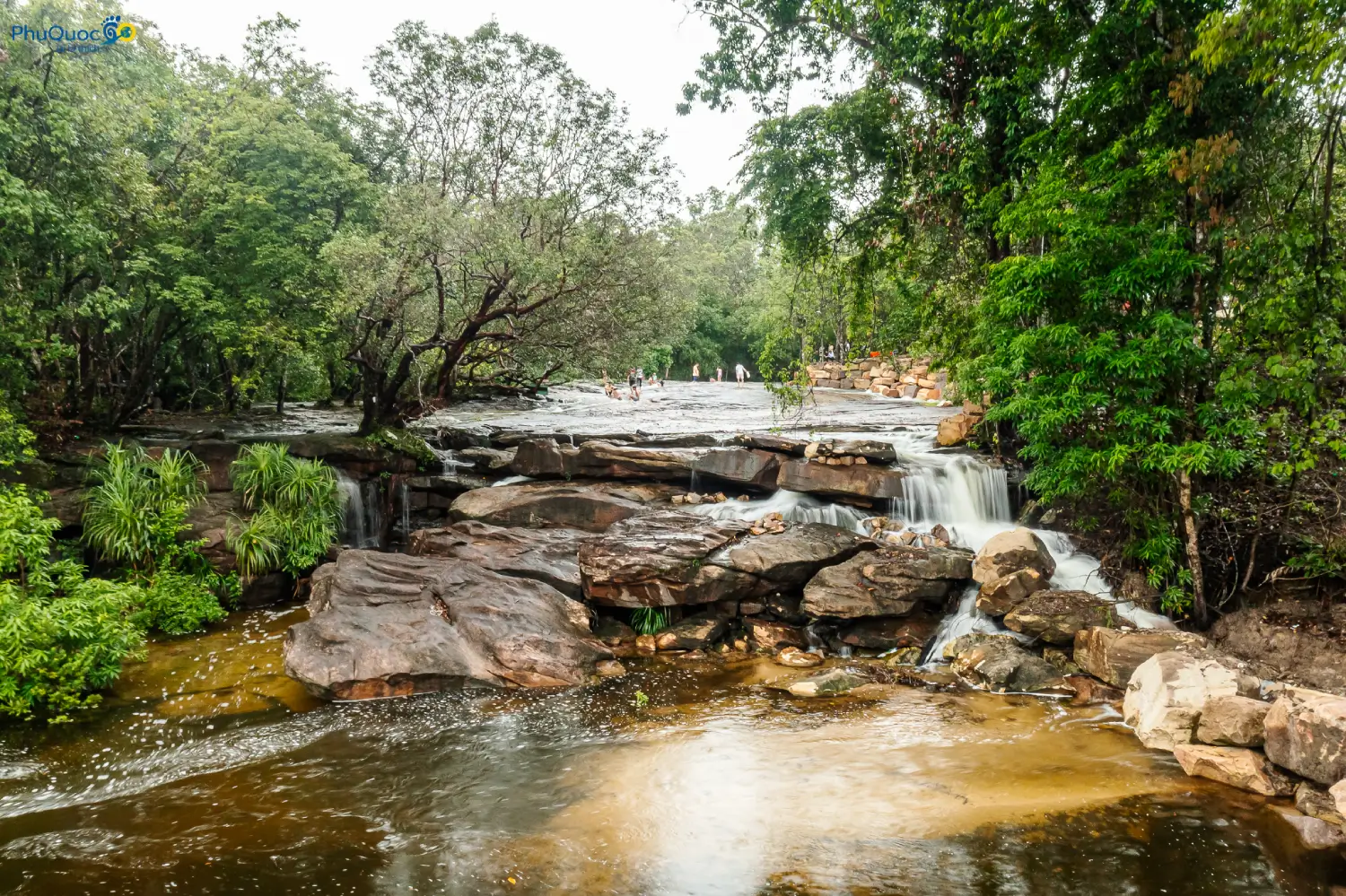
3. Jungle Trekking to Pristine Suối Tiên (Advanced – Authentic Experience)
- Length: ~6 km
- Duration: 4 – 5 hours
- Experience: Unlike Suối Tranh, Suối Tiên Phu Quoc remains fully pristine as it has seen minimal impact from commercial tourism. This trail requires you to step across uneven rocky paths, make gentle uphill climbs, and weave through wild myrtle thickets. In return, you get a completely quiet space filled only with birdsong and cool flowing water.
4. Peak Conquest Trails: Núi Chúa, Tiên Sơn & Đá Bạc (Survival Challenge)
- Difficulty: Hard – For experienced trekkers
- Duration: 1 – 2 days (depending on the peak)
- Details:
- Conquering Núi Chúa Phu Quoc: Known as the “roof of Phu Quoc” at an elevation of 603 m. The climb is steep, with several sections requiring you to hold onto vines.
- Tiên Sơn Peak Phu Quoc and Đá Bạc Peak Phu Quoc: Stunning trekking spots offering sweeping views of the deep green jungle and the Northern sea.
- Toward Hàm Ninh Mountain Phu Quoc: A trail combining jungle terrain with breathtaking sunrise ocean views.
Tour operator note: When attempting mountain peak conquest trails, never go alone. You must have at least one local guide leading the way and carry walkie-talkies or GPS tracking devices because cell service inside the deep jungle is very spotty.
Exploring the Jungle by Motorbike Across North Island
If you lack the stamina for hours of foot trekking, you can still enjoy the beauty of the primeval forest by riding a motorbike along the trail crossing North Island.
The red dirt road cutting straight through the ancient forest connects famous destinations like Gành Dầu Phu Quoc, Bãi Dài Phu Quoc, Rạch Vẹm Phu Quoc, and Bãi Thơm Phu Quoc. Riding under the lush green canopy, breathing in the scent of tree sap and sweeping sea breezes, brings an invigorating sense of freedom.
Quick tip: You should read our Phu Quoc Motorbike Rental Guide 2026 beforehand to pick a high-clearance bike with good brakes. Avoid renting low-clearance automatic scooters when taking red dirt jungle tracks.
Comparison Table of Phu Quoc Primeval Forest Exploration Options
| Criteria | Short-Walk Trail Trekking | Mountain Peak Conquest (Núi Chúa/Tiên Sơn) | Motorbike Ride Across North Island Jungle |
| Difficulty | Easy (1/5) | Hard (4.5/5) | Easy (1.5/5) |
| Target Audience | Families, children, first-timers | People in good shape, experienced trekkers | Groups of young friends, backpacking enthusiasts |
| Duration | 2 – 3 hours | 6 – 10 hours (or overnight) | 2 – 4 hours |
| Highlight Landscapes | Centuries-old trees, small streams, vines | Panoramic North Island view from above, deep ancient forest | Tree-lined route on both sides, combined beach swim |
| Tour Guide Requirement | Not required (but recommended) | 100% Required | Not required |
Preparation Guide & Survival Rules When Trekking Phu Quoc Jungle
For a safe nature exploration trip, save this preparation checklist right away:
Mandatory personal gear:
- [ ] Clothing: Long-sleeved shirts and pants made of breathable, quick-drying fabric. Avoid shorts to prevent thorn scratches and mosquito bites.
- [ ] Footwear: Specialized trekking shoes or athletic shoes with anti-slip treaded soles.
- [ ] Medication & Protection: Mosquito repellent, insect spray, anti-leech ointment, bandages, medical alcohol.
- [ ] Other items: Light raincoat, waterproof pouch for phones, power bank, emergency whistle.
- [ ] Water & Snacks: Minimum 1.5 – 2 liters of water per person along with energy bars, chocolate, or nuts for quick refueling.
“5 NOs” rules to protect the primeval forest:
- NO littering: Carry all personal trash (plastic bottles, plastic bags) out of the forest.
- NO breaking branches, picking flowers, or hunting: Do not harm flora and fauna, especially rare wild orchids.
- NO starting fires: The forest is extremely fire-prone during the dry season. Do not smoke or build fires spontaneously in the jungle.
- NO separating from the group: Always stay on established trails; do not branch off into unfamiliar jungle paths on your own.
- NO loud noise: Maintain a quiet environment so as not to startle wild animals.
Conclusion & Next Steps
Phu Quoc primeval forest serves not only as a “green lung” regulating climate and preserving invaluable freshwater sources for the entire Pearl Island, but also as a foundation for sustainable ecotourism. Spending a day away from city noise to immerse yourself in the serene quiet of the ancient forest will surely revitalize your energy.
If you are planning an upcoming trip to Phu Quoc, take a look at our detailed guide articles:
- Comprehensive Phu Quoc Travel Guide A-Z for first-timers.
- List of the Best Trekking Spots in Phu Quoc to select a suitable itinerary.
- All-inclusive Phu Quoc Trekking Tours accompanied by professional local guides.
FAQ – Frequently Asked Questions When Exploring Phu Quoc Primeval Forest
Are there leeches or venomous insects in Phu Quoc primeval forest?
Leeches in Phu Quoc mainly live in damp leaf litter near streams. To avoid leeches: Wear long pants, tucking pant cuffs into high socks. Spray DEET insect repellent on your shoes and ankles before setting off. Avoid sitting directly on damp leaf litter or hollow decaying tree trunks.
Do I need to hire a tour guide when exploring Phu Quoc primeval forest?
Phu Quoc's tropical forest terrain has dense vegetation, and trails easily get overgrown or obscured after heavy rains. Local guides not only keep you on the right path to prevent getting lost, but also know areas with slippery rocks, caves, or drinkable water sources.
Is trekking Phu Quoc jungle during the rainy season (May – October) dangerous?
Monitor weather forecasts closely; never go into the jungle on days with continuous heavy rainfall. Do not attempt to wade across streams if the water turns murky with fast-moving currents. Equip yourself with high-friction trekking shoes and specialized trekking poles.
Can children and seniors go trekking in Phu Quoc jungle?
Families with children aged 6 and older or healthy seniors can join gentle routes (under 3 km). The trip offers kids rewarding practical lessons about nature. Bring enough water and sun hats, move at a moderate pace, and rest every 20 minutes.
How much are entrance fees for Phu Quoc National Park and forest trekking costs?
Suối Tranh entrance fee: Around $1.1/person. Hiring a private local guide (for mountain climbs): Ranges from $19.0 - $45.7/day depending on group size and trail difficulty.
Is overnight self–camping allowed in Phu Quoc primeval forest?
To ensure forest fire safety and wildlife conservation, self-camping is strictly prohibited across most primary forest zones. If you wish to experience overnight camping, you must book through licensed ecotourism operators or camp at designated beach areas along the forest edge.
Is riding a motorbike through North Island jungle prone to getting lost or running out of gas?
The North Island forest track stretches dozens of kilometers without gas stations or mechanic shops. Before entering the jungle road, you must fill your gas tank completely in central Dương Đông or Cửa Cạn. Also, maintain a steady speed of 30 - 40 km/h because gravel on dirt paths can cause skidding.
What should I eat and where should I rest when trekking Phu Quoc jungle?
There are no food shops or services inside the forest. After completing your trek, you can visit: Rạch Vẹm / Bãi Thơm Fishing Villages: Enjoy fresh seafood (flower crab, gỏi cá trích, sea urchin) at more affordable prices than central areas. Roadside eateries in Gành Dầu: Savor charcoal-grilled free-range chicken or the famous bún quậy to replenish your energy quickly.