

Have you ever stood in the middle of an ancient tropical rainforest, surrounded by the buzzing of cicadas, the trickling of streams, and the deep blue ocean swaying in the distance? Most visitors to Pearl Island get caught up in the cycle of resort beaches, luxury hotels, and artificial amusement parks. But if you are starting to feel overwhelmed by noisy crowds and want to find the rawest, most untouched Phu Quoc—trekking through the jungle and mountains is the answer.
As an independent tour operator who has been connected to Phu Quoc’s forests and mountains for over six years, I understand your concerns very well: Is jungle trekking in Phu Quoc safe? Are there leeches or poisonous mosquitoes? Which trail should a first-timer choose? In this article, I will break down the full reality of Phu Quoc trekking, from stunning trails to hidden cost traps and potential risks that no ad will ever tell you.
Why Phu Quoc Is Not Just About Beaches: Pain Points & Overlooked Realities
Many people are surprised to learn that over 50% to 70% of Phu Quoc Island’s total area is actually Phu Quoc National Park—recognized by UNESCO as a World Biosphere Reserve.
Peak Season Drawbacks & Alternative Solutions
During peak tourist season, the southern beaches and central Duong Dong often suffer from severe overcrowding. Service prices soar, and every photo ends up full of people. Meanwhile, the primary forests in the north and the mountain ranges stretching from south to north offer a stark contrast: quiet, cool, and teeming with natural life.
💡 Honest insight from a local guide: “Don’t think Phu Quoc only has small hills. The steep incline packed with tree roots on Mount Chua or the chest-thumping winds at Tiên Sơn Peak will make even experienced trekkers tip their hats in respect.”
Most Common Concerns
- Fear of getting lost: Cellular signal (4G/5G) deep in the jungle is almost nonexistent. Google Maps is completely useless.
- Fear of injury & weather: The rainy season makes trails as slippery as spilled oil, while the dry season brings intense sun on exposed ridgelines.
- Lack of accurate information: Online reviews often glorify the scenery while hiding the real difficulty, leaving many travelers disappointed or exhausted halfway through.
Honest Review of 5 Phu Quoc Trekking Trails in 2026
Below is a detailed review of 5 Phu Quoc Trekking trails rated from easy to hard to help you pick the right match for your fitness level.
- Suối Tranh / Suối Đá Bàn: Easy – For families
- Primary Forest: Moderate
- Đỉnh Đá Bạc: Scenic views
- Tiên Sơn Đỉnh: High difficulty
- Núi Chúa: Extremely tough
1. National Park Primary Forest Trail – A Safe Choice for Beginners
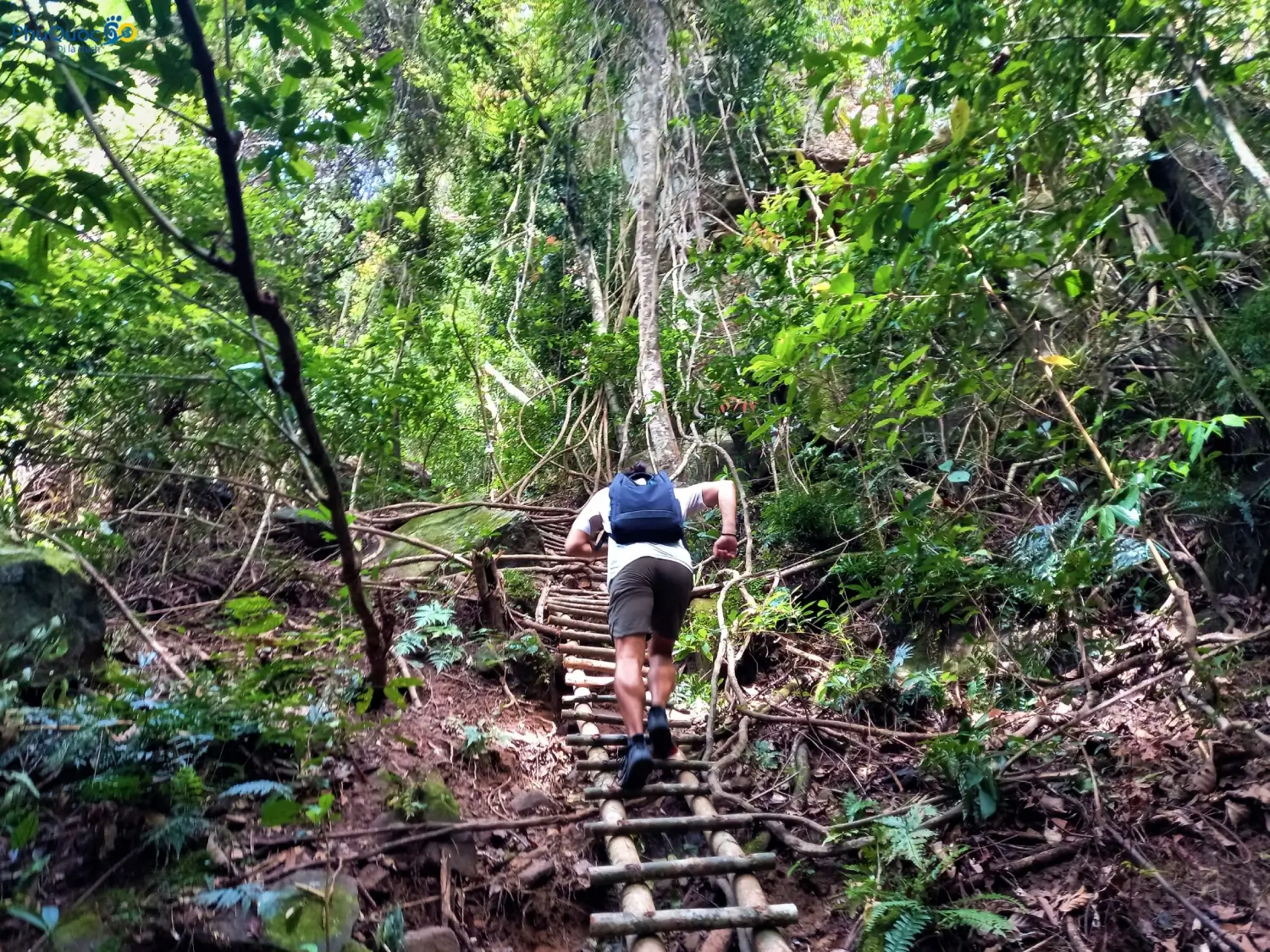
If you are trying Phu Quoc primary forest trekking for the first time, this is the most ideal route. This trail cuts through the signature vegetation of the northern island’s tropical rainforest.
- Duration: 2–3 hours | Difficulty: Easy to Moderate.
- Real experience: Walk under a canopy of centuries-old trees, gaze at giant climbing vines and ancient ferns, and listen to forest birds singing. The cool air with its subtle scent of damp, decaying leaves feels very refreshing.
- Local tip: This trail is well-shaded but has high humidity. You should go in the morning from 7:00 AM to 9:00 AM to breathe the freshest air and avoid the muggy midday heat.
2. Conquering Mount Núi Chúa – The “Roof of Pearl Island” Challenge
Known as the roof of Phu Quoc at an elevation of 603 meters above sea level, the Mount Núi Chúa Climb is not for beginners.
- Duration: 5–7 hours (round trip) | Difficulty: Hard / Challenging.
- Distance: Around 7–8 km one way.
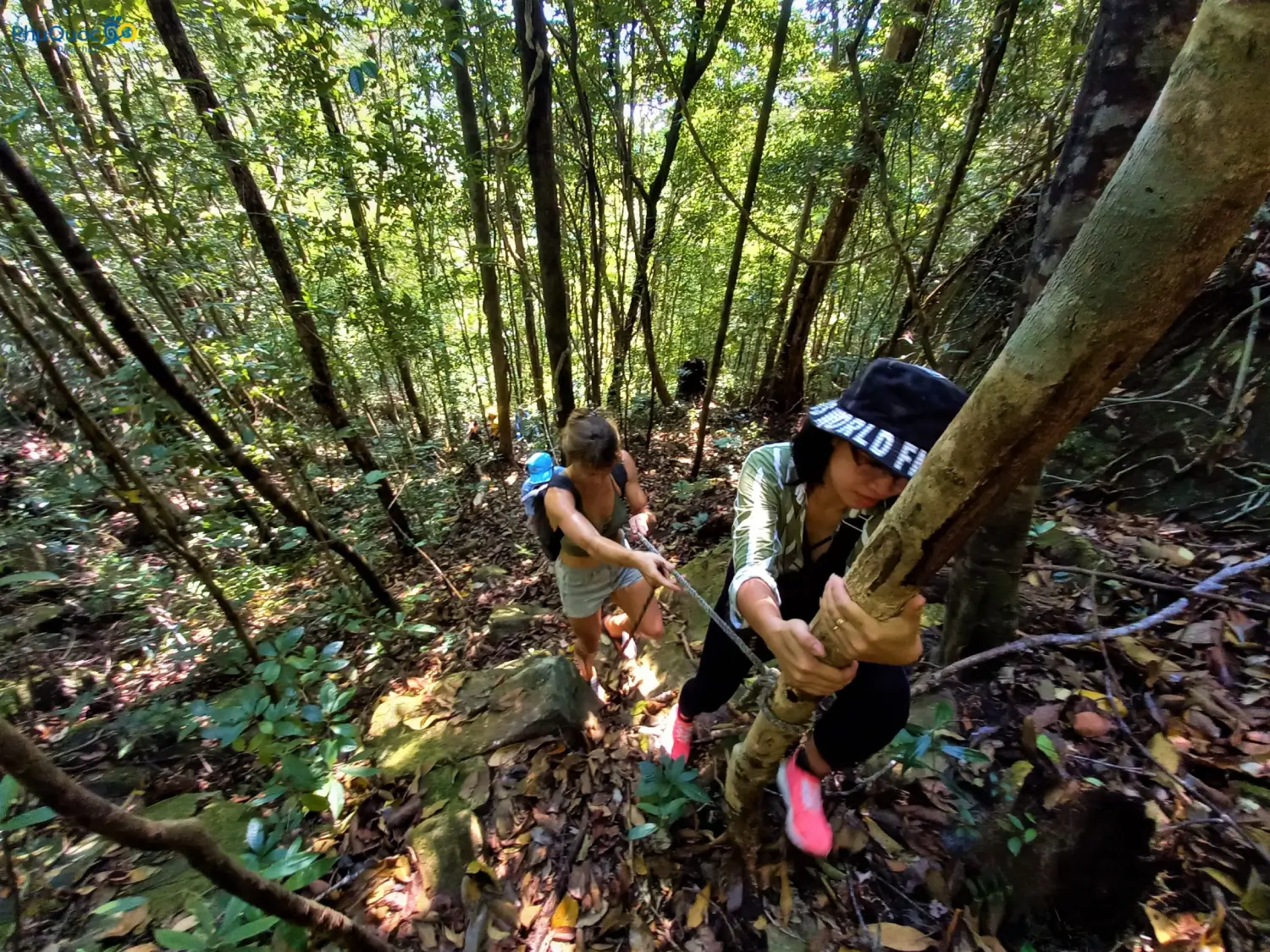
- Real experience: The terrain is extremely varied: from damp soil slopes and tangled tree roots to large rock faces that require careful scrambling. At the summit, the reward is a panoramic view of the vast green forest canopy stretching all the way to the northern and eastern seas.
- Safety warning: Trail boundaries get overgrown quickly and are easy to lose. Never attempt this route alone without a local guide leading the way!
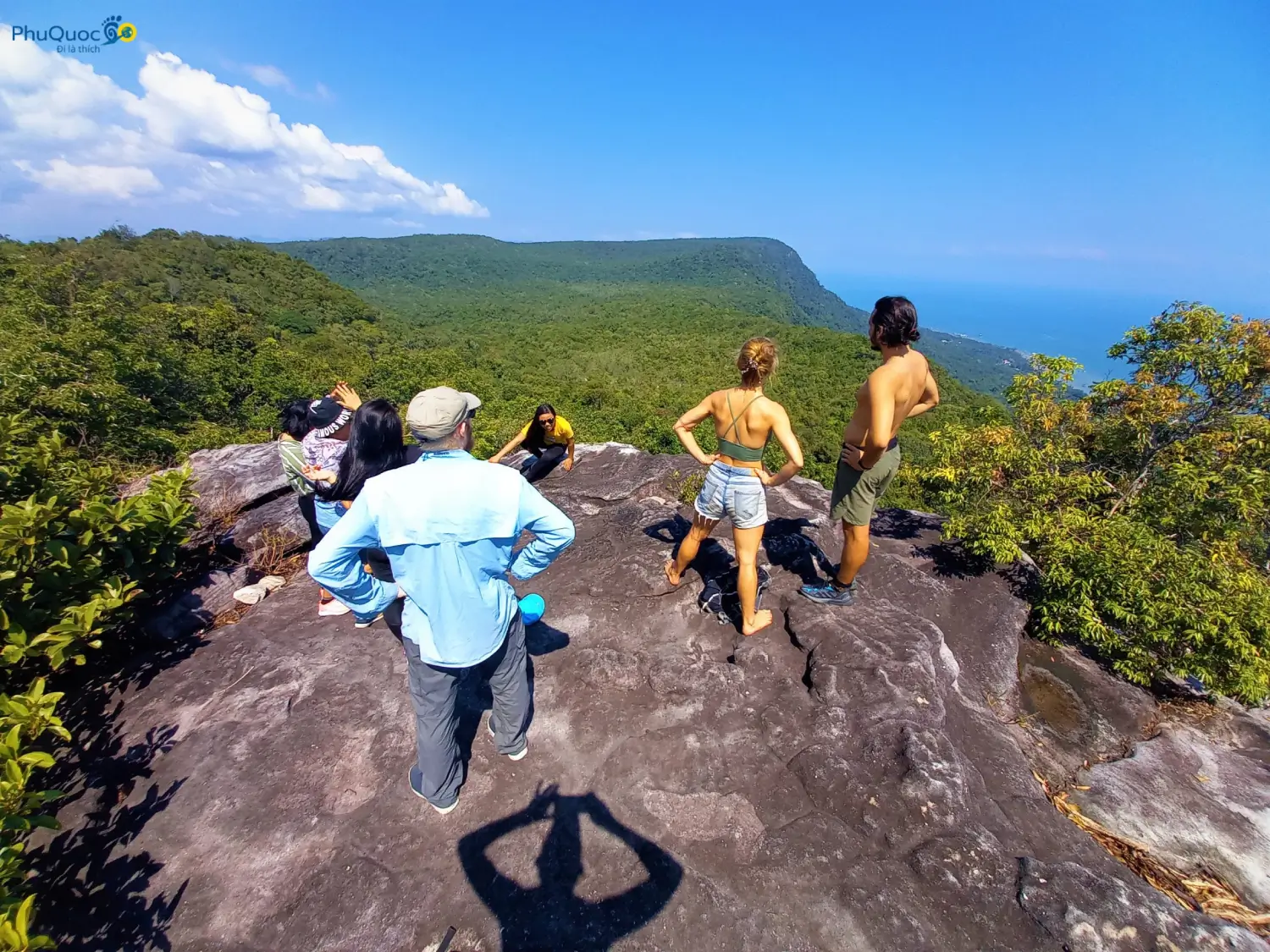
3. Cloud Hunting and Sunrise at Tiên Sơn Peak
Among all the Phu Quoc trekking routes, Tiên Sơn Peak is emerging as a trending spot for young travelers who love wide-angle photography.
- Duration: 3–4 hours | Difficulty: Moderate to Hard.
- Real experience: The path runs along a narrow mountain ridge flanked by fields of reed grass swaying in the wind. Setting off around 4:30 AM, you will reach the summit just in time to watch the sun rise over the sea as clouds drift through the valleys below. The 360-degree view is spectacular!
- Crucial note: The ridgeline gets very windy with zero large trees for shade. Bring a lightweight windbreaker and wear a hat with a chin strap so it doesn’t blow away.
4. Đỉnh Đá Bạc – Unique Granite Boulder Check-in Point
If you want a trail that is less demanding than Mount Núi Chúa but still offers incredible photos, choose Đỉnh Đá Bạc Peak.
- Duration: 2–3 hours | Difficulty: Moderate.
- Real experience: The main highlight is a massive exposed natural granite boulder field at the summit. Looking down from here, the primary forest carpet stretches endlessly until it meets the water’s edge.
- Critical perspective: Scrambling up the granite rocks can be slick if your shoes lack good traction. Direct sunlight on the bare rocks generates intense heat around midday.
5. Easy Trekking Combined with Swimming at Suối Tranh & Suối Đá Bàn
Suitable for families with older children or groups of friends looking for a gentle, relaxing picnic outing.
- Duration: 1–2 hours | Difficulty: Easy.
- Real experience: Follow the easy paved stone path at Suối Tranh Stream or scramble along flat bedrock at Suối Đá Bàn Stream. You can dip your feet in the cool water or set up a small picnic.
- Local tip: The stream areas are only full of water and beautiful from June to November. In the middle of the dry season (January to April), the streams can dry up completely, leaving only dry rock beds.
Overview Comparison Table of Trekking Trails
| Trail | Difficulty | Duration | Main Highlights | Best For |
| Primary Forest | 2/5 | 2–3h | Botanical discovery, well-shaded | Beginners, nature enthusiasts |
| Mount Núi Chúa | 5/5 | 5–7h | Highest summit (603m), panoramic views | Fit trekkers seeking a challenge |
| Tiên Sơn Peak | 3.5/5 | 3–4h | Grassy ridgelines, cloud hunting, sunrise | Young travelers, photography lovers |
| Đỉnh Đá Bạc | 3/5 | 2–3h | Large granite boulders, forest-sea view | Short trek + photo seekers |
| Suối Tranh / Đá Bàn | 1/5 | 1–2h | Waterfalls, cool streams, flat walking paths | Families, light picnic visitors |
Preparation Guide & Essential Jungle Survival Lessons
When Is the Best Time for Phu Quoc Trekking?
The contrast between Phu Quoc’s two seasons directly impacts your trek:
- Dry season (November to April): This is the prime window. The weather is dry, forest paths are firm, mosquitoes are fewer, and visibility from mountain peaks is crystal clear. Check out our detailed Phu Quoc weather guide to plan your schedule.
- Rainy season (May to October): The jungle is lush green and streams overflow with water. However, the paths get slick as grease, forest leeches emerge, and minor landslide risks exist. Waterproof gear is mandatory if you hike during this period.
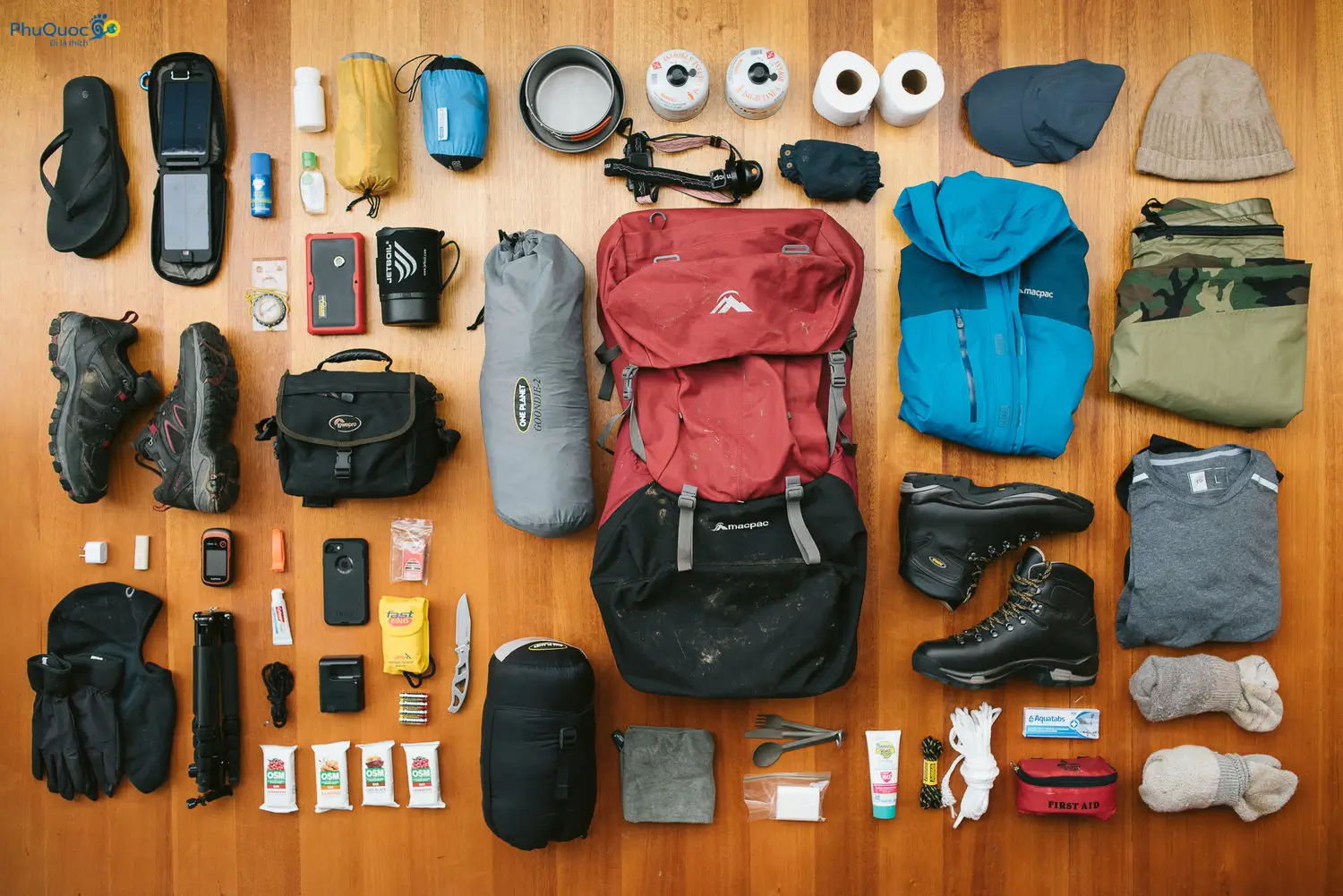
Packing Checklist for Your Trek
- Trekking/hiking shoes: High-traction lugged soles (avoid smooth flat sneakers or flip-flops).
- Clothing: Stretchy, breathable athletic wear; long sleeves are recommended to protect against scratches and mosquitoes.
- Water & Snacks: At least 1.5–2 liters of water per person. Bring energy bars, protein gels, or chocolate for quick energy boosts.
- Meds & Protection: Insect repellent (DEET), sunscreen, anti-leech spray, and a basic first-aid kit.
- Electronics: Power bank and dry bags for your phone/camera.
⚠️ Local warning: “There is zero cell signal deep inside the National Park forest. If you venture out independently without notifying local authorities or residents, an injury like a sprained ankle or getting lost can quickly become extremely dangerous!”
Post-Trek Itinerary Ideas & Recommended Next Steps
After spending the morning burning energy through forest trails and mountain slopes, spending the afternoon relaxing and recharging with fresh seafood is hard to beat.
Recommended Next Spots to Relax
- Visit the northern island: After hiking or trekking in the north, drive down to Rạch Vẹm Fishing Village to see starfish, or stop by peaceful Bãi Thơm Beach for local-priced seafood.
- Watch the sunset: Head over to Gành Dầu Cape to admire the distant outline of the Cambodian coast against a fiery crimson sunset.
- Savor local specialties: If you finish your trek on the eastern side, drop by the fishing village near Hàm Ninh Mountain to enjoy sweet, freshly boiled flower crab.
To move flexibly between trekking start points and sightseeing areas, having reliable transportation is crucial. You should check out our guide on Phu Quoc Motorbike Rental Tips 2026 to choose a sturdy bike with good uphill power.
If you are traveling as a family with seniors or young children, consider pairing a light trek with a visit using Vinpearl Safari Phu Quoc tickets or exploring our list of the Top 15 Most Beautiful Phu Quoc Tourist Spots to make the most of your time.
You can find broader travel tips on transportation and dining in our Phu Quoc Travel Guide A–Z. If you are not confident venturing into the deep forest on your own, explore our Phu Quoc trekking tours accompanied by experienced local guides who know the terrain inside out to ensure total safety.
Frequently Asked Questions (FAQ)
Should I go trekking alone in Phu Quoc?
Cell service in the jungle is extremely weak or completely non-existent. Tropical rainforest trails change rapidly due to dense vegetation, making it easy for hikers to get disoriented. If an unexpected injury occurs, calling for help on your own is extremely difficult.
Are there leeches in Phu Quoc trekking and how do you deal with them?
Apply Tiger Balm, essential oil, or insect repellent spray to your shoes, socks, and pant cuffs before heading out. Wear long sleeves and pants, and tuck your pant legs into tall socks. If bitten, stay calm, spray a little rubbing alcohol or essential oil, or gently scrape the leech's head off with your fingernail, then disinfect the spot with an alcohol swab.
Can children and seniors participate in Phu Quoc trekking?
Children aged 6 and older and seniors in good health should stick to the Suối Tranh, Suối Đá Bàn, or short National Park trails. Stay away from steep routes like Mount Núi Chúa and Tiên Sơn Peak. Ensure children are always accompanied 1-on-1 by an adult to watch every step.
Should you go trekking in Phu Quoc during the rainy season?
Rain turns soil slopes slippery and mossy tree roots easy to trip over. On the plus side, the forest canopy is vibrant green and waterfalls and streams flow beautifully. You must pack deep-lugged hiking boots, trekking poles for stability, and a high-quality rain suit.
How much water should you bring for a day trek?
Phu Quoc's tropical forest weather has high humidity, causing your body to sweat and dehydrate quickly. You should bring an extra bottle of electrolyte drink or mineral tablets to replace lost salts. Do not drink water directly from forest streams unless it has been boiled or filtered with specialized gear.
Do you need permission from forest management to trek in Phu Quoc?
Open commercial spots like Suối Tranh only require buying an entrance ticket at the gate. For routes going deep into the core zone of the National Park (like Mount Núi Chúa summit), going with a licensed tour operator will help you avoid legal issues regarding forest conservation. Always follow the leave-no-trace principle: leave nothing but footprints, take nothing but photos.
How much does it cost to hire a local trekking guide/porter?
This fee typically covers route guidance, safety support, and basic medical supplies. It is best to book in advance through reputable tour agencies on the island rather than hiring a motorcycle taxi driver or someone random at the forest edge. Full-package tour prices (including round-trip transport, light lunch, and guide) usually range from $24.7 to $45.7 per guest.
What training should I do before climbing Mount Núi Chúa in Phu Quoc?
Focus on thigh, calf, and endurance exercises like stair climbing, squats, and light jogging. Practice balance exercises to prevent ankle sprains on slick rocks or exposed roots. Carefully evaluate your knee joint condition if you have a history of joint pain when walking downhill.