

Wisps of incense smoke mingling with the sound of waves in Gành Dầu or the stillness beside the Cửa Cạn River offer a moment of spiritual peace in northern Phú Quốc. However, many travelers searching for “Nguyen Trung Truc Temple Phu Quoc” feel confused because they do not realize that northern Phú Quốc has two entirely separate temples (one in Cửa Cạn Commune and one in Gành Dầu Commune). This confusion often leads to planning the wrong route, visiting the wrong location, or arriving unprepared for local worship customs and dress requirements.
This article provides detailed directions to both temples along Route DT45. We will update practical information (opening hours, free admission, clothing, and etiquette), share tips for attending the death anniversary observances in the eighth lunar month, and suggest ways to combine your visit with a northern Phú Quốc itinerary for a fulfilling pilgrimage.
Background: Why do travelers often “lose their way” when looking for Nguyễn Trung Trực Temple?
Most first-time independent travelers open Google Maps and search for “Nguyễn Trung Trực Temple.” The map then returns several different results (including the temple in mainland Kiên Giang and the two temples on Phú Quốc).
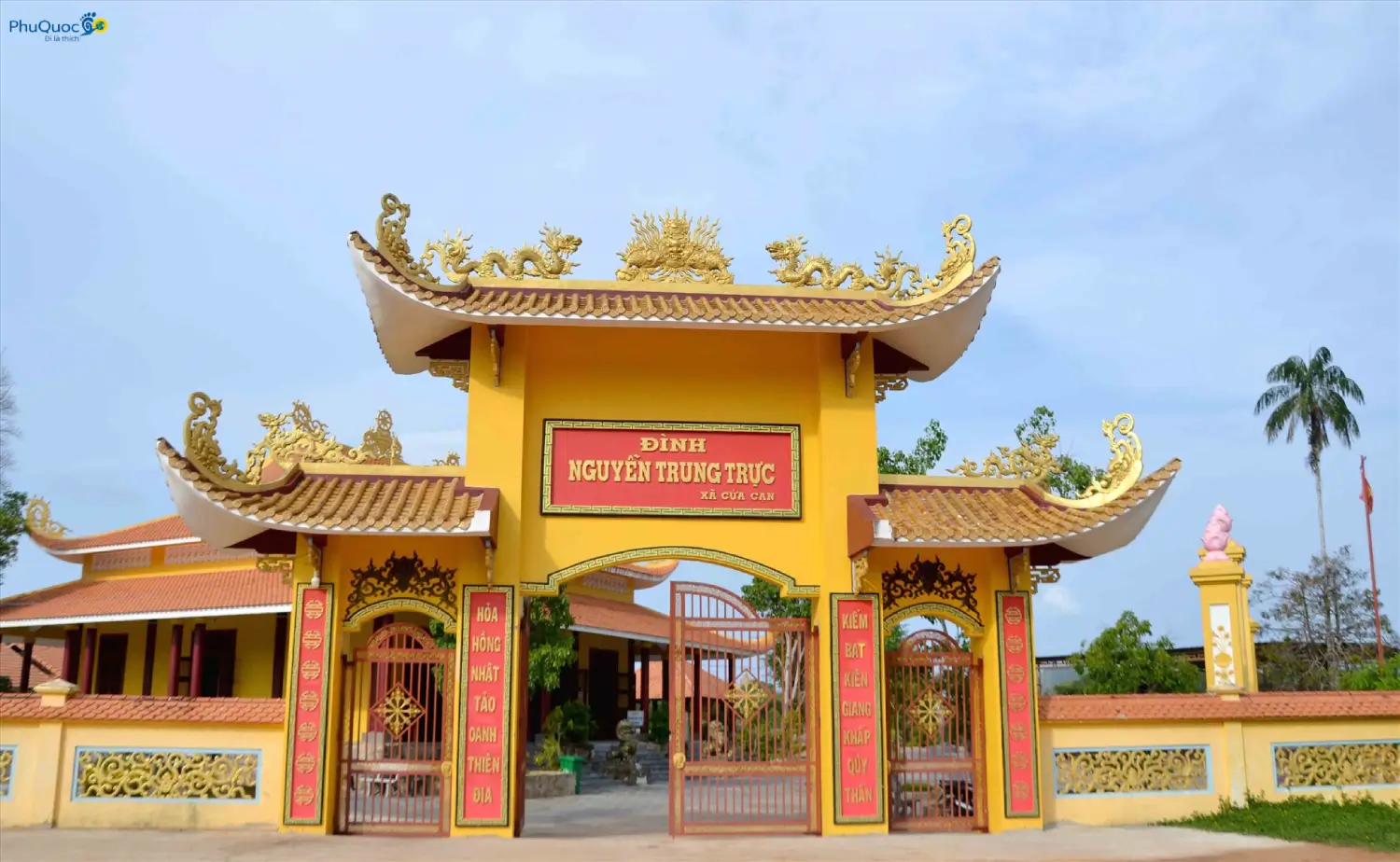
Nguyễn Trung Trực Temple in Phú Quốc is a place of worship honoring the national hero Nguyễn Trung Trực from the French colonial period in southern Vietnam, as well as a longstanding center of folk religious beliefs for Phú Quốc residents. Failing to distinguish between the Cửa Cạn and Gành Dầu temples causes many families to spend an extra hour backtracking, disrupting their amusement park plans or causing them to miss the sunset.
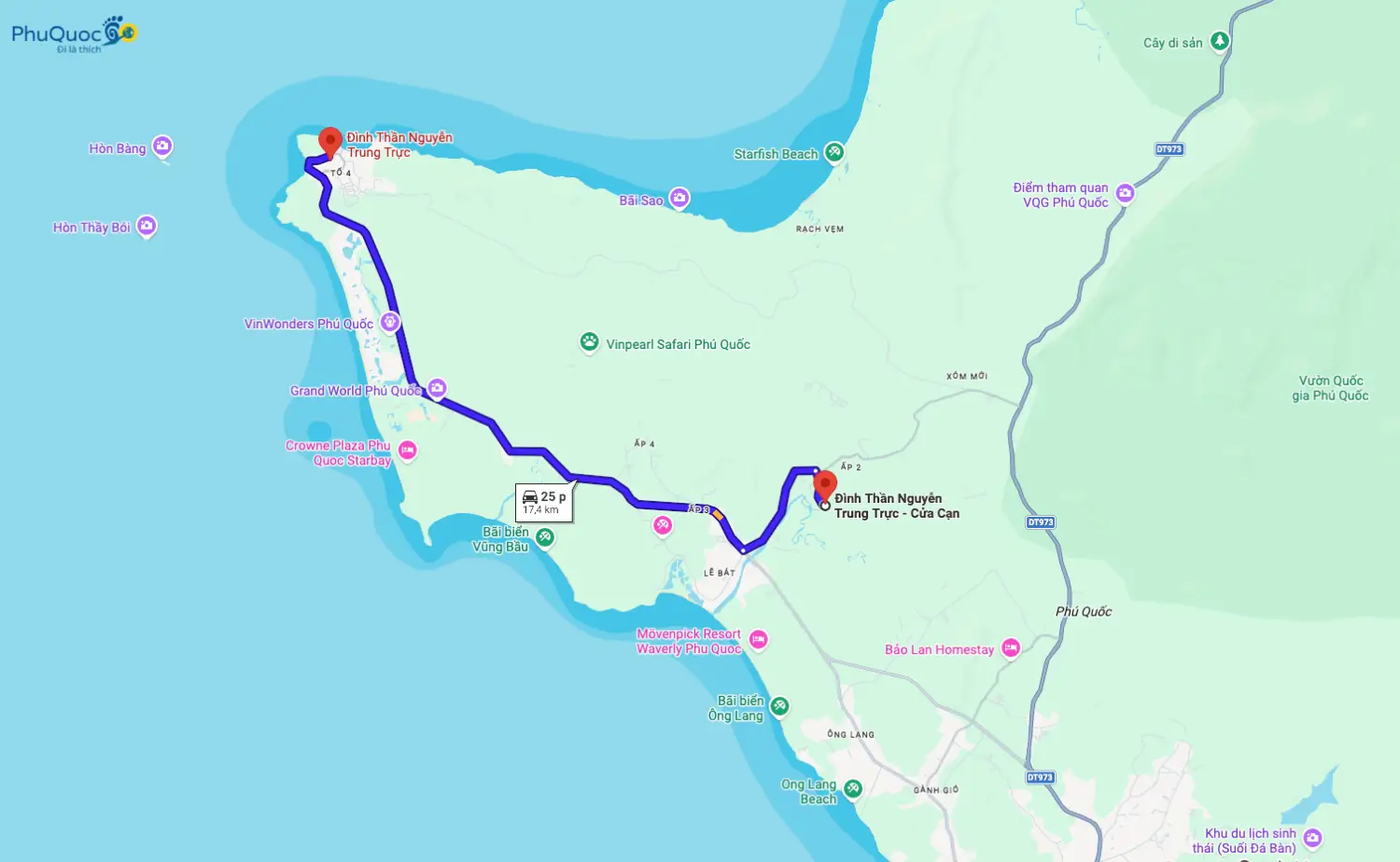
A closer look at the 2 Nguyễn Trung Trực temples in northern Phú Quốc
Starting in central Dương Đông Ward, simply follow Route DT45 (the Cửa Cạn–Bãi Dài road) toward northern Phú Quốc. Along this same road, you will reach the Cửa Cạn temple first, then continue for another ten-plus kilometers to reach the Gành Dầu temple.
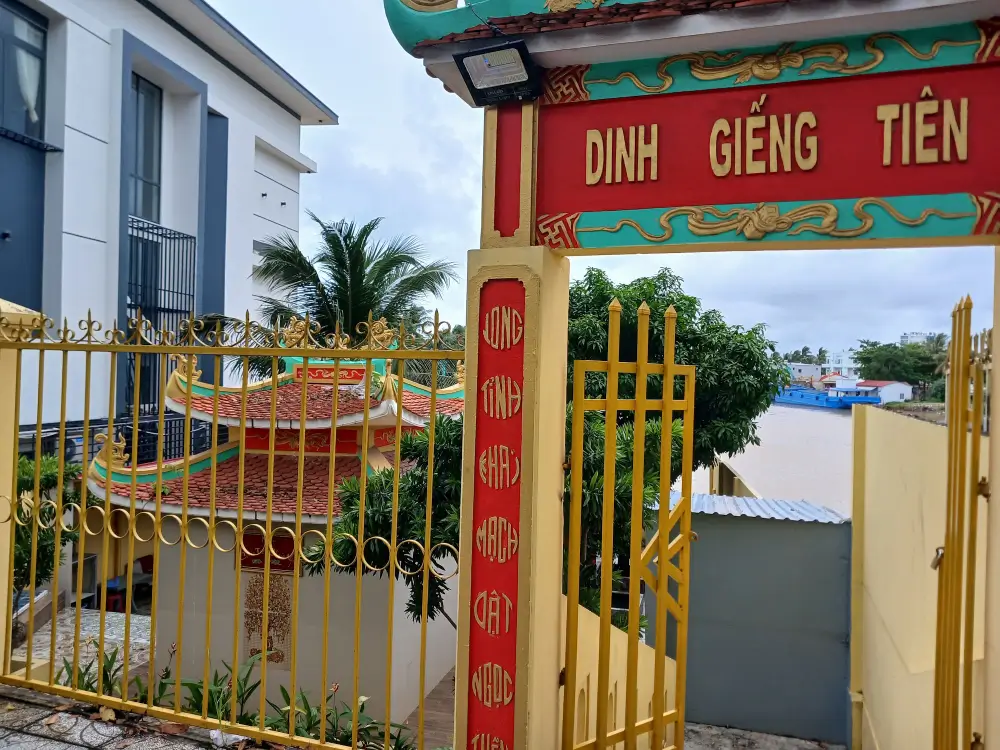
Nguyễn Trung Trực Temple in Cửa Cạn—Stillness beside a historic river
- Location: Hamlet 2, Cửa Cạn Commune, Phú Quốc City (approximately 15–18 km from central Dương Đông).
- Travel time: About 20–25 minutes by vehicle.
- Setting & Experience: The Cửa Cạn temple sits quietly beside the Cửa Cạn River, reflecting the traditional village temple architecture of southern Vietnam. It does not attract large crowds of tour groups, offering a sense of complete tranquility. This temple is associated with many historical traces of Nguyễn Trung Trực’s resistance fighters, who once operated here.
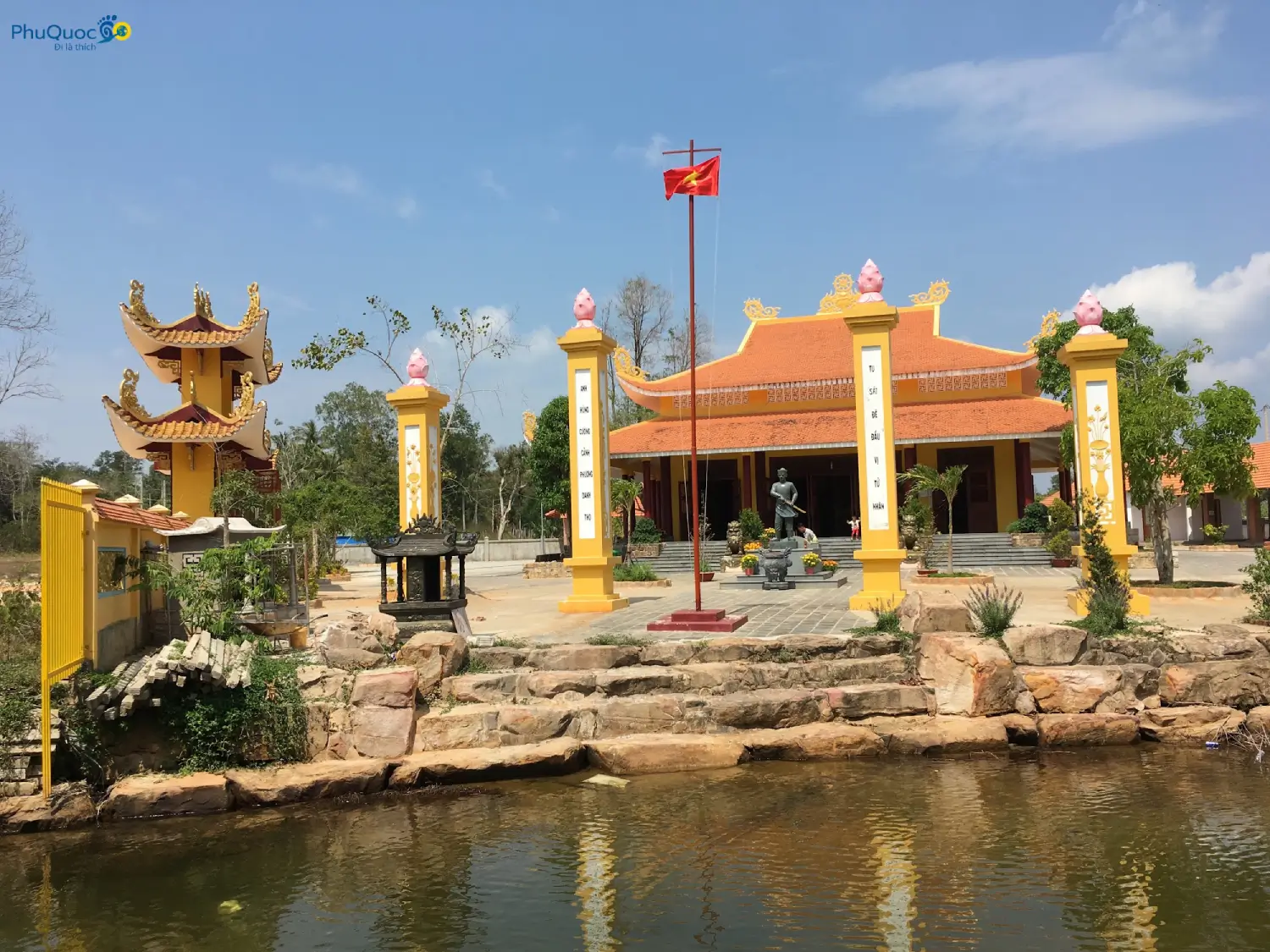
- Local tip: Early morning is the best time to visit the Cửa Cạn temple. The cool air, with a faint scent of incense mingling with moisture drifting in from the river, feels very pleasant.
- Combined itinerary: After offering incense, you can rent a kayak to explore the river ecosystem or go swimming at Cửa Cạn Beach in Phú Quốc. This location is also very close to traditional pepper farms.
Nguyễn Trung Trực Temple in Gành Dầu—A grand setting at the nation’s edge
- Location: Right beside the coast at the northernmost end of the island, in Gành Dầu Commune (28–30 km from Dương Đông).
- Travel time: About 40–45 minutes by vehicle.
- Setting & Experience: The Gành Dầu temple is larger and more imposing, welcoming large numbers of travelers visiting Phú Quốc’s spiritual sites every day. Its most distinctive feature is its location right beside the sea. After offering incense at the altar in the main worship hall, you can step into the spacious courtyard, sit beneath the shade of an old tree, enjoy the Gành Dầu sea breeze, and look toward Cambodia’s maritime boundary in the distance along the horizon.
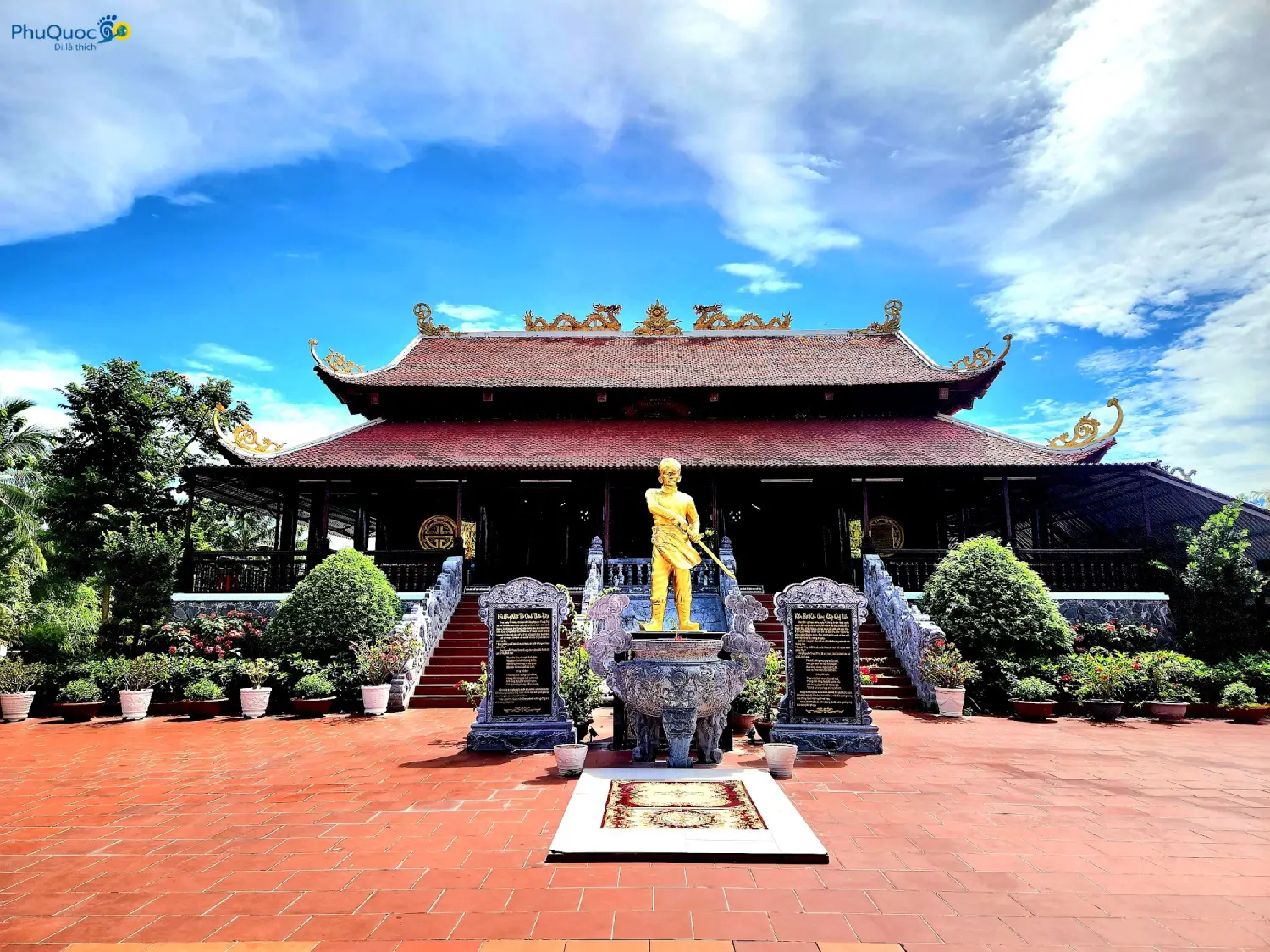
- Our advice: There are many motorcycle taxi drivers and street vendors in this area. Be polite and decline gently if you do not wish to buy anything.
- Combined itinerary: After visiting the temple, a short trip takes you to Gành Dầu Cape to watch the sunset, eat seafood, or visit Gành Dầu in Phú Quốc. A little farther away, about 12–15 km, is the starfish haven of Rạch Vẹm in Phú Quốc.
Which temple should you visit if you have limited time?
If you have plenty of time, visiting both temples along your route through northern Phú Quốc offers the most complete experience. However, if time is tight, consider the following:
- Choose the Cửa Cạn temple if: Your itinerary focuses on the Phú Quốc United Center complex. Traveling from the Cửa Cạn temple to Grand World Phú Quốc, VinWonders Phú Quốc, or Vinpearl Safari Phú Quốc is a short and convenient trip.
- Choose the Gành Dầu temple if: You want to explore the island’s far northern end, combine your visit with seafood in a fishing village and sunset views near the border, and prefer a larger, livelier temple setting.
Whichever location you visit, you can travel by motorcycle to enjoy views of the national park forest, or take a free VinBus to Grand World and then a taxi for approximately another 5 km to the Gành Dầu temple.
A guide to temple visits: Practical information & Worship customs
To ensure a smooth pilgrimage and show respect for the honored predecessor worshiped as the village’s tutelary deity, pay close attention to the following information:
- Admission & Opening hours: Both temples offer completely free admission to residents and travelers. On regular days, the temples are open from 06:00 to 18:00. During the annual Nguyễn Trung Trực death anniversary observances (the 26th–28th days of the eighth lunar month), the management keeps the temples open day and night for pilgrims.
- Clothing (Very important): Respectful, modest clothing is required (shirts with sleeves and pants or skirts extending below the knees). Do not wear swimwear, spaghetti-strap tops, or very short shorts when entering the grounds to offer incense. If you happen to be wearing beachwear, you should only pay your respects from a distance outside the gate.
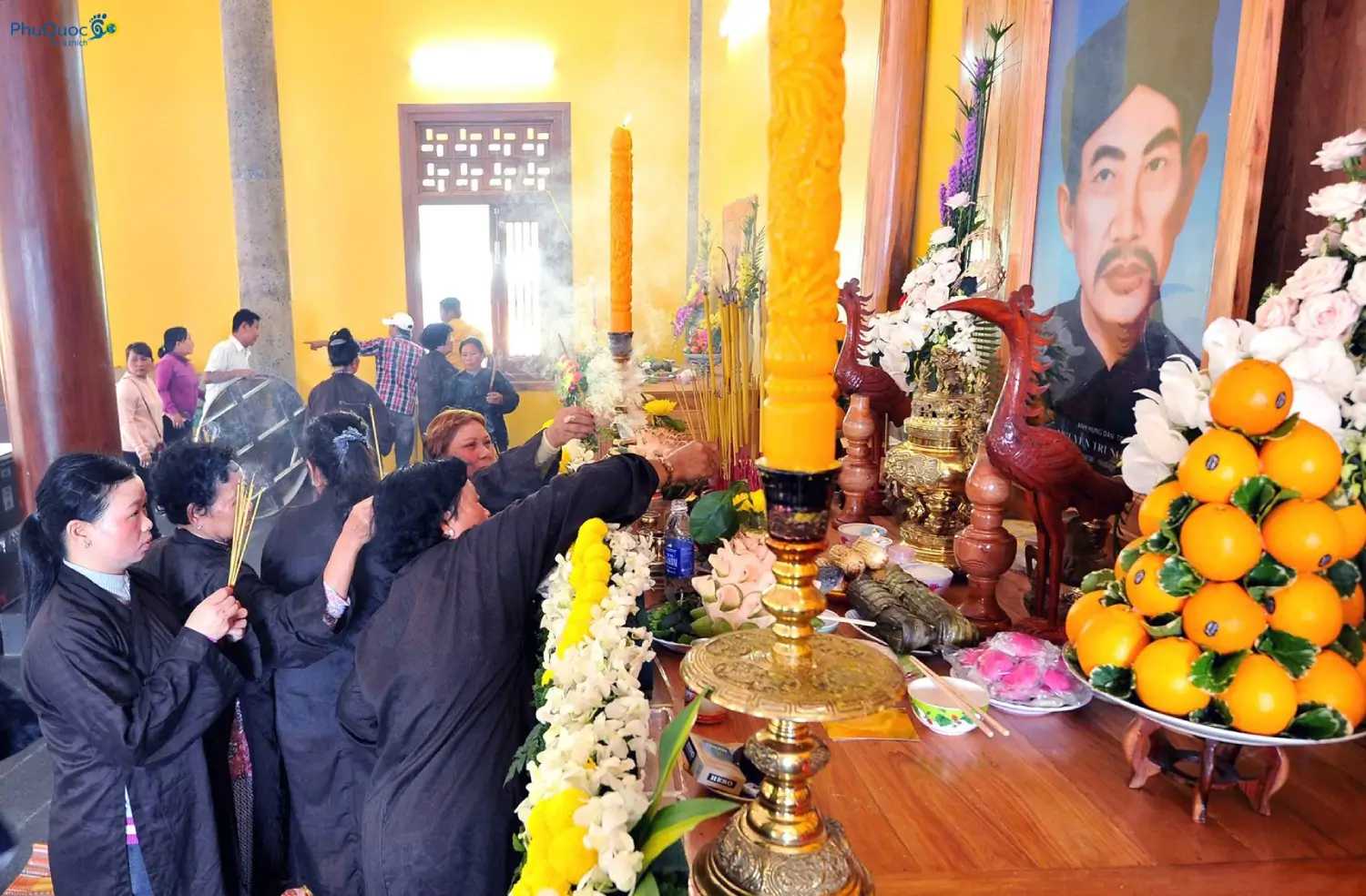
- Etiquette:
- Remove your shoes and hat, and leave them neatly in the designated area before stepping across the threshold into the main worship hall.
- Keep quiet, walk gently, speak softly, and do not joke around in the sacred worship area.
- Limit filming and photography directly facing the main altar or in areas displaying Châu bản imperial records and Mộc bản woodblocks unless you have obtained permission from the temple management.
- Experiencing the death anniversary observances: If you visit Phú Quốc during the eighth lunar month, stop by the temple 1–2 days before the main observances. You can join the atmosphere of local cultural life: watch residents clean the temple courtyard, tend the cooking fires while wrapping bánh tét, and sort and chop vegetables. In particular, you can enjoy free vegetarian or nonvegetarian meals that the temple serves to visitors from near and far, reflecting the warmth of the island’s people.
Final thoughts
Learning about Phú Quốc’s history through the two Nguyễn Trung Trực temples deepens your understanding of its cultural heritage and gives you rare moments of peace during a busy vacation. You can travel independently or read more articles on Phú Quốc travel tips to make the most of your route.
If you would like someone to arrange transportation and a guide who can share insightful cultural stories, consider incorporating this destination into a 3-day, 2-night Phú Quốc itinerary or explore a list of other well-known spiritual sites in Phú Quốc, such as Dinh Cậu, Dinh Bà Thủy Long Thánh Mẫu, and Sùng Hưng Cổ Tự, to make your trip more meaningful.
FAQ: Answers to travelers’ practical questions
Which is more sacred, the Gành Dầu temple or the Cửa Cạn temple?
The Cửa Cạn temple is associated with physical traces of the resistance fighters' historical activities. The Gành Dầu temple is larger and serves as a center for major annual festivals and death anniversary observances in northern Phú Quốc. You can choose which to visit based on the convenience of your personal route.
Are there hidden charges for eating vegetarian or nonvegetarian meals at the temple during the death anniversary observances?
All cooking expenses are covered by voluntary donations from residents, small merchants, and pilgrims (cash, rice, and vegetables). Feel free to join a meal. If you wish, you can place a small amount of money in the temple's donation box, but no one will pressure you.
I happen to be wearing short shorts and a sleeveless shirt on my way to VinWonders. Can I enter the temple?
Solution: If you happen to be wearing unsuitable clothing, you can borrow an áo tràng worship robe (if the temple has some available at the entrance) or buy/rent a large shawl from nearby stalls to cover your legs/shoulders. If you have nothing to cover yourself with, you should only pay your respects from outside in the temple courtyard and avoid entering the worship area to maintain its solemnity.
Google Maps gives me the wrong directions. How can I find the right route?
Local tip: Instead of entering the general search term "Đình Nguyễn Trung Trực," enter exactly "Đình thần Nguyễn Trung Trực xã Cửa Cạn" or "Đình thần Nguyễn Trung Trực Gành Dầu," depending on your destination. Both are on the main DT45 road, so following this road will take you past both temples.
Is filming or taking photos inside the temple's main worship hall allowed?
Do not use flash or take close-up photos of incense bowls, the main altar, or old Châu bản imperial records and Mộc bản woodblocks. Do not film artistic videos, dance, or strike inappropriate poses for social media content inside the worship area. If you want a keepsake photo, take a wide shot and maintain a respectful posture.