

Are you planning a trip to the Pearl Island but wondering whether Coi Nguon Museum Phu Quoc deserves a spot on your itinerary? Many first-time visitors to Phú Quốc get so caught up in its deep-blue beaches and impressive entertainment complexes that they miss a “treasure trove” preserving the island’s history, nature, and the spirit of its people.
After more than 6 years accompanying thousands of tour groups around Phú Quốc, we understand your hesitation: You’re worried that a museum visit might be dry or time-consuming, or you’re unsure about directions and admission prices. In this article, I’ll walk you through an exhibition space housing more than 3,000 unique artifacts, share authentic stories about local culture, and suggest an itinerary that makes the most of your time and budget!
Background & Why Visitors Shouldn’t Miss Cội Nguồn Museum
Today, most visitors to Phú Quốc focus only on taking photos at busy commercial tourist attractions. As a result, many return from their trips and admit with regret: “I only know that Phú Quốc is beautiful, but I have no idea how people here lived in the past or how fish sauce production and pearl farming began.”
Also, in the sweltering midday heat of southern Vietnam’s coast, finding a quiet, cool stop where the whole family can learn something is a very practical need. Coi Nguon Museum Phu Quoc is the perfect piece of the puzzle to fully address that concern. This isn’t a dry government institution, but the lifelong work of an island native dedicated to preserving Phú Quốc’s traditional cultural heritage for future generations.
“If you come to Phú Quốc just to admire the sea, you’ve only appreciated its outward beauty. Visit Cội Nguồn Museum, and you’ll truly connect with the soul of the Pearl Island.” — Shared by a longtime visitor.
1. Overview & Where Is Coi Nguon Museum Phu Quoc?
Address & Getting There
The address of Coi Nguon Museum Phu Quoc is 149 Trần Hưng Đạo Street, Neighborhood 7, Dương Đông Ward, Phú Quốc City, Kiên Giang Province. It sits directly on the main coastal road connecting central Dương Đông with the southern part of the island.
- From central Dương Đông: It takes only about 7–10 minutes by motorbike or taxi (approximately 3–4 km).
- From Phú Quốc Airport: The drive takes about 15 minutes toward the Trần Hưng Đạo junction.
Coi Nguon Museum Phu Quoc Opening Hours & Admission Prices in 2026
- Opening hours: 7:00 – 11:00 (morning) and 13:00 – 17:00 (afternoon), open every day of the week.
- Coi Nguon Museum Phu Quoc admission: $1.9 / adult (A very affordable price, with all proceeds used to maintain and restore the preservation space).
The Founder’s Inspiring Story
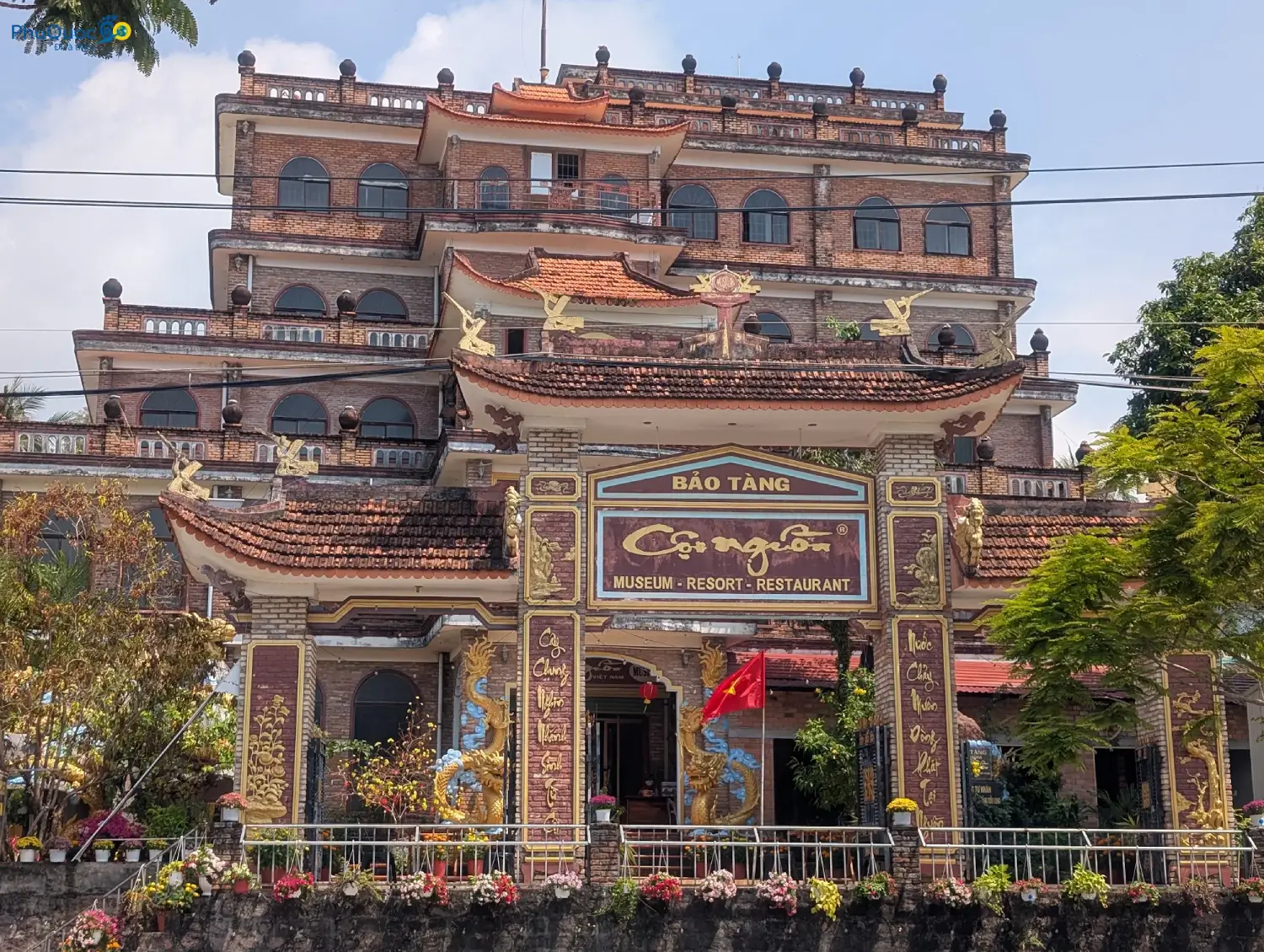
Construction of the museum began in 2009 under Huỳnh Phước Nghệ — a native born and raised in Phú Quốc. A graduate of Open University who spent many years working as a tour guide, Nghệ was troubled to see the island’s valuable artifacts bought up by traders or lost to places elsewhere. He spent decades traveling far and wide, pouring his dedication and personal finances into collecting everything from pieces of fossilized moss to ancient pottery fragments from shipwrecks to establish this substantial five-story private museum.
2. A Detailed Look at 5 Unique Exhibition Areas at Cội Nguồn Museum
The museum’s exhibition space houses more than 3,000 valuable objects and is divided into 5 distinct themed areas, taking visitors from one surprise to the next.
Layout of the 5 exhibition floors at Cội Nguồn Museum:
- Floors 1 & 2: Ancient Ceramics & Archaeological Artifacts
- Floor 3: Phú Quốc Sea & Forest Collection
- Floor 4: Trai Wood & Mountain Bamboo Art
- Floor 5: Recreations of Traditional Trades
- Rooftop: Documents on the Land and Its People & Panoramic Views
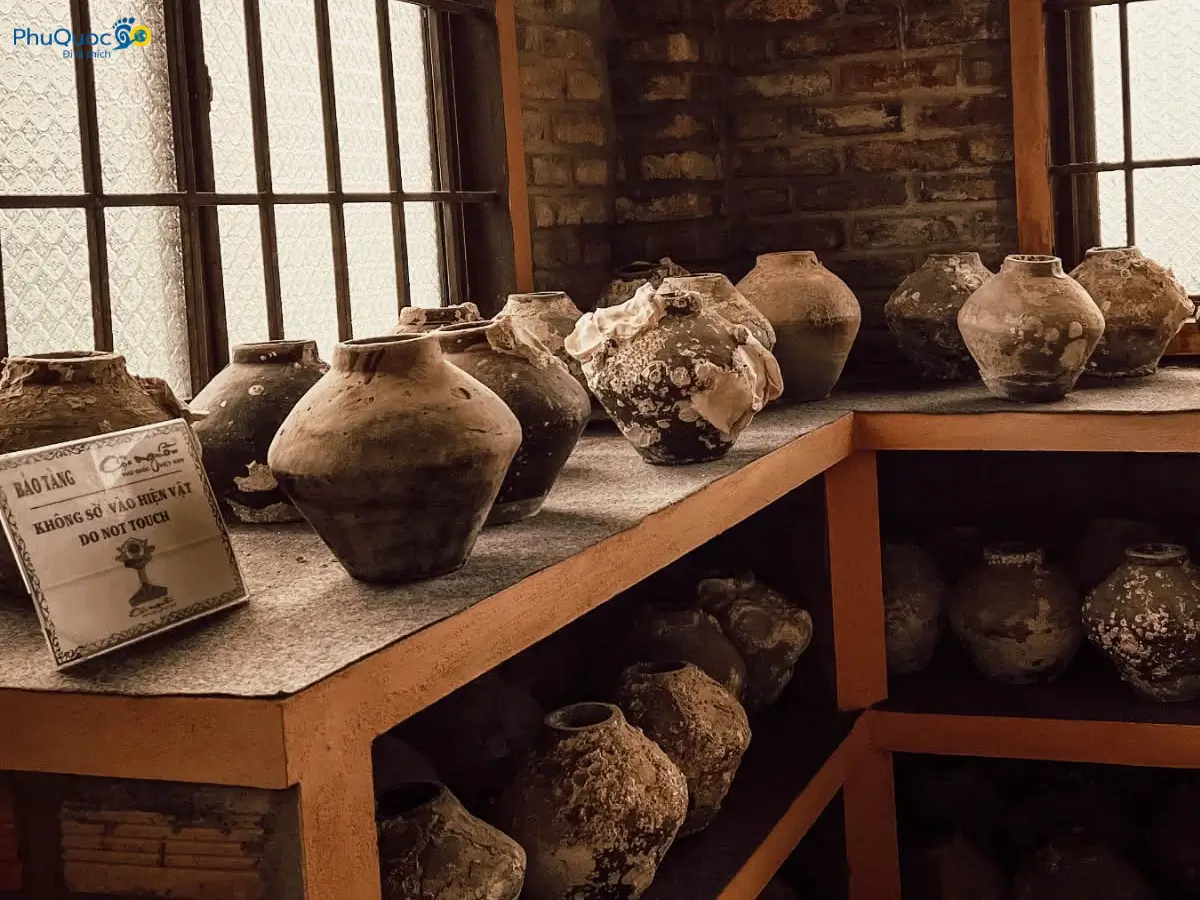
Area 1: A Collection of Ancient Ceramics and Archaeological Artifacts Spanning Centuries
As soon as you enter the first exhibition floor, you’ll be amazed by 2,645 objects carefully selected from 9 major private collections.
- A wide range of historical periods: The artifacts here date from the 7th century BCE through the Lý, Trần, Lê, and Nguyễn dynasties.
- Artifacts of international trade: Particularly notable are ceramic fragments originating in Thailand and China in the 15th–16th centuries. These offer vivid archaeological evidence that Phú Quốc was once a busy stop on the ancient maritime ceramics trade route.
- The experience in person: The subdued scent of old pottery and the warm yellow light illuminating every age-worn crack in ceramic jars and porcelain bowls make you feel as though you’ve stepped hundreds of years into the past.
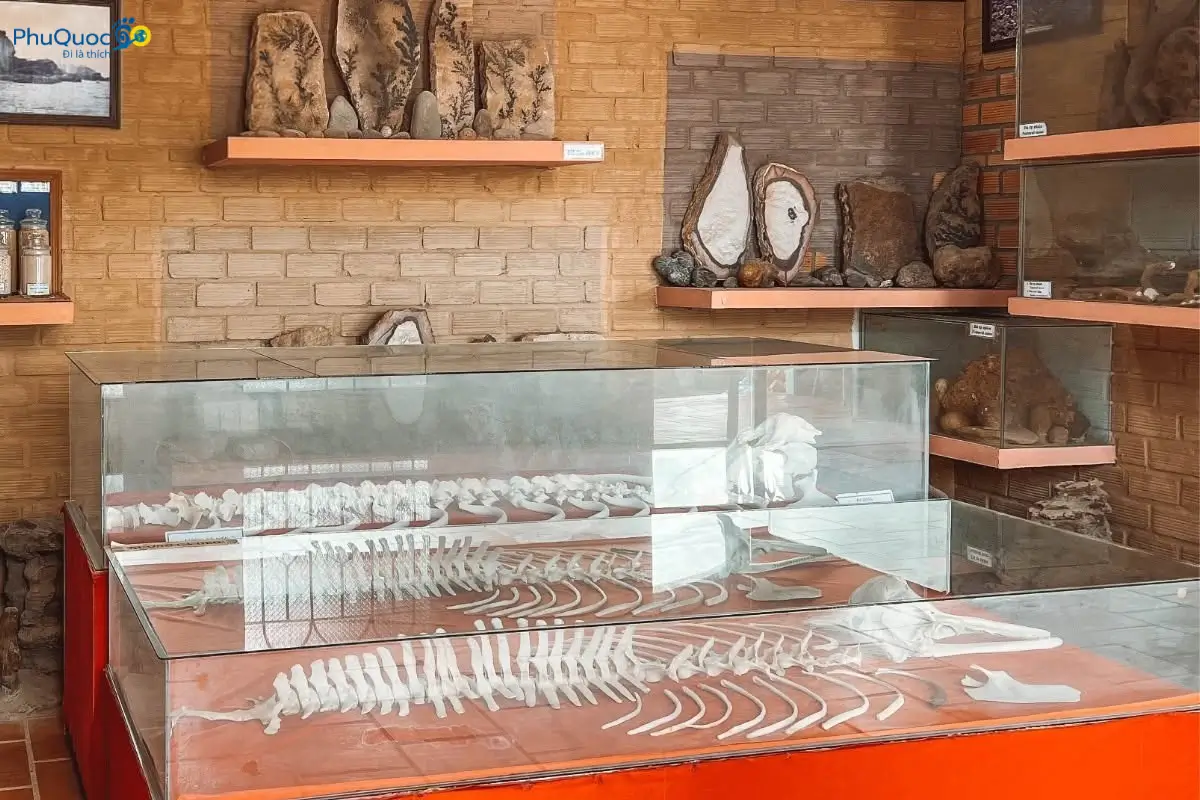
Area 2: Untouched Nature in the Phú Quốc Sea and Forest Collection
If you love nature and marine life, this area will keep you quietly absorbed for quite a while. We consider it an excellent space for learning through observation if you’re visiting with young children.
- A variety of specimens: More than 20 types of rock pieces and fossilized moss; over 10 types of marine coral; and 90 unusual varieties of snail and clam shells collected from the waters around the Pearl Island.
- Rare animal artifacts: Particularly notable are 20 objects crafted from dugong bones (Dugong — a legendary animal associated with the image of mermaids), whale bones, and tusks from wild boars in Phú Quốc’s primary forests.
- Observation tip: Take a close look at the fully preserved dugong skeleton. You’ll sense both the abundance and the vulnerability of the marine ecosystem.
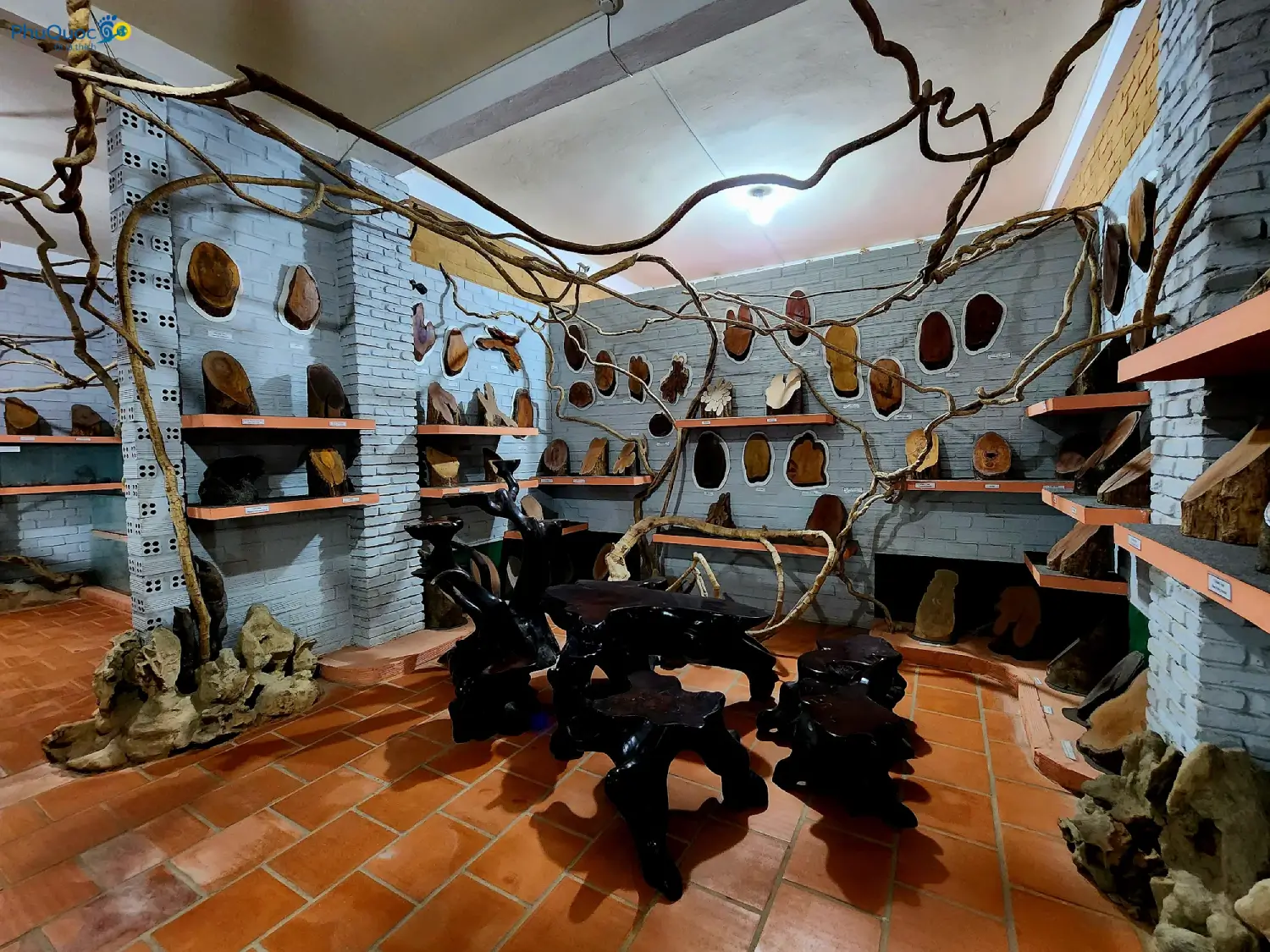
Area 3: Unique Art Made from Weathered Trai Wood and Mountain Tree Roots
This area contains 30 hand-carved artworks and 64 table-and-chair sets made entirely from mountain bamboo roots, mountain mai and guava roots, and weathered trai wood submerged in streams for decades.
- The artisans’ hands: Through the skill of local artisans and more than 10 years of collecting and carving, rough, lifeless roots have become winding figures of dragons, phoenixes, and animals with a remarkable presence.
- A sensory experience: As you walk through this room, you’ll catch the faint scent of natural wood and run your hands over the smooth grain of carefully polished weathered wood.
Area 4: Recreations of Local Traditional Craft Villages
More than 100 miniature and original objects here recreate a vivid picture of island residents’ working lives across generations:
- Fish sauce production: Models recreate bời lời wood barrels bound with rattan, storage jars, and tools for drawing off concentrated first-press fish sauce. You’ll understand why Phú Quốc fish sauce making became a national intangible cultural heritage.
- Fishing & Pearls: Basic fishing equipment, fishing weirs, traps, nylon nets, and models of harvesting and cultivating Phú Quốc pearls.
- Traditional stilt houses: A simple living space with a brass tray, a kerosene lamp, and a wood-burning stove fully recreates the daily life of the island’s residents in the past.
Area 5: The Land, Its People, and the Legend of Goddess Kim Giao
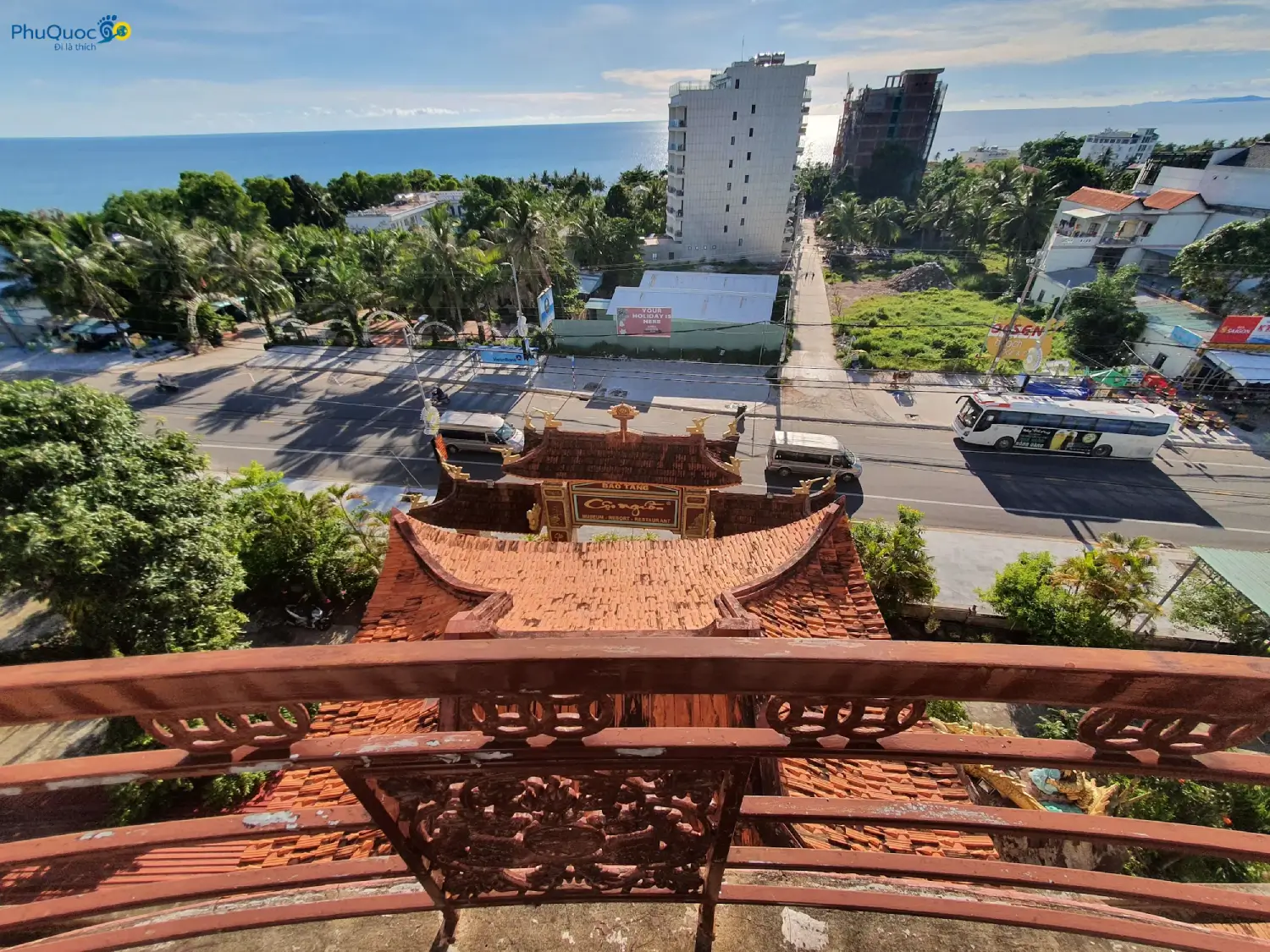
The museum’s top floor preserves more than 300 documents, reference materials, and valuable books (in Vietnamese, English, and French) recording settlement and the defense of sovereignty in Phú Quốc’s history.
- Goddess Kim Giao highlight: A dedicated, respectfully arranged corner displays documents about Kim Giao (commonly called Chúa Ngọc) — the goddess who protected Phú Quốc’s residents during the early settlement period.
- Historical significance: According to the old legend, she led people to the island to settle the land, taught them farming, and allowed them to trade freely without the harsh taxes and labor levies imposed under the Nguyễn dynasty. Thanks to her protection, the early community was able to settle down and make a living, turning the Pearl Island from wilderness into a prosperous trading port.
3. An Objective Review: Cội Nguồn Museum’s Strengths & Limitations
To help you make the most objective decision about visiting Cội Nguồn Museum, we’ve put together the following table of practical pros and cons:
| Criterion | Key Strengths | Limitations to Consider |
| Location & Transportation | Right on Trần Hưng Đạo Street, very easy to find, and convenient to add to an itinerary. | The car parking area is a little cramped during peak hours. |
| Exhibition Value | A substantial collection (>3,000 artifacts), with detailed, accurate historical information. | Lacks the high-tech interactive displays (VR/AR) found in modern museums. |
| Space & Visitor Experience | An airy five-story design, with a full view of the sea off Dương Đông from the rooftop. | There is no elevator; older adults or visitors with mobility difficulties may find the stairs somewhat tiring. |
| Cost | $1.9/ticket — extremely inexpensive for the knowledge you gain. | Does not include complimentary self-service drinking water. |
4. Local Tips for Visiting Cội Nguồn Museum
For a rewarding visit without unnecessary hassles, keep a few tips from longtime tour professionals in mind:
- The best time to visit: Go between 8:30 – 10:00 in the morning or 14:00 – 15:30 in the afternoon. At these times, sunlight coming through the glass windows creates a beautiful setting for souvenir photos, while the cooler weather makes moving between floors more comfortable.
- Suitable clothing: Wear neat, sweat-absorbing clothing and sneakers or flat sandals, as you’ll be climbing stairs through 5 floors.
- Protecting the artifacts: Most ancient objects are kept in glass cases or behind barriers. Never touch the weathered wood pieces or exposed objects without permission, to avoid damaging or wearing down the heritage items.
- Include some souvenir shopping: The ground floor sells reliable local specialty products and handicrafts made from shells and pearls. Prices are clearly marked, so you don’t have to worry about being overcharged.
5. Suggested Itineraries Combining Nearby Attractions
After exploring Phú Quốc’s culture at the museum, you can easily work it into a convenient sightseeing itinerary around the island:
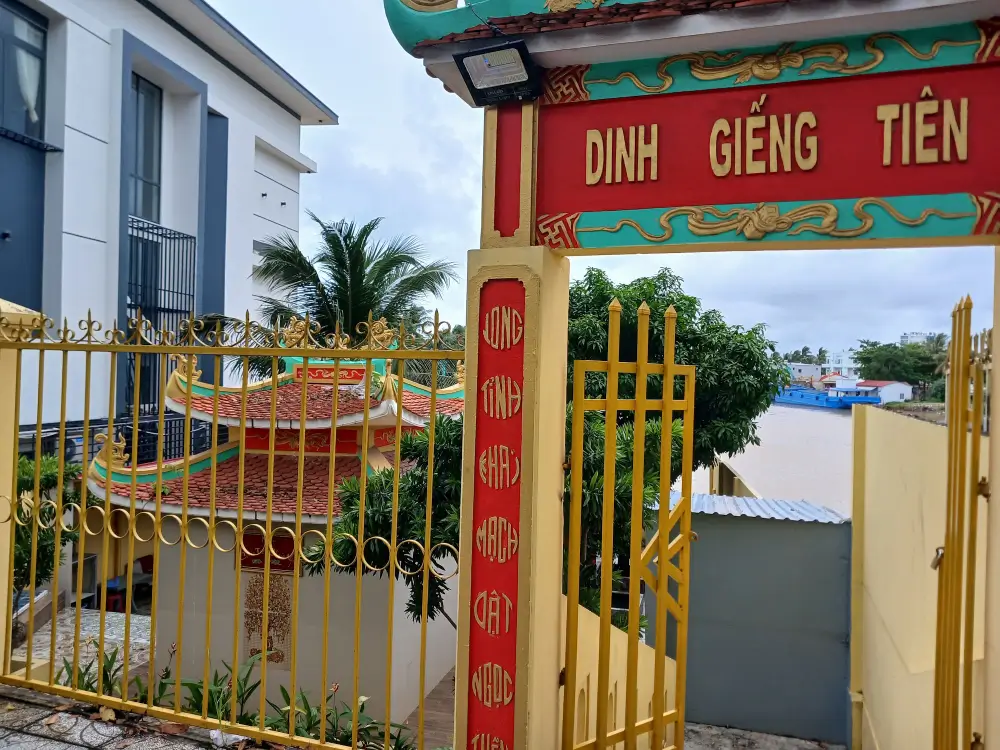
- Central Island Route: Visit Cội Nguồn Museum in the morning ➔ Explore Dinh Cậu & Ông Lang Beach in the afternoon ➔ Enjoy Phú Quốc Night Market in the evening.
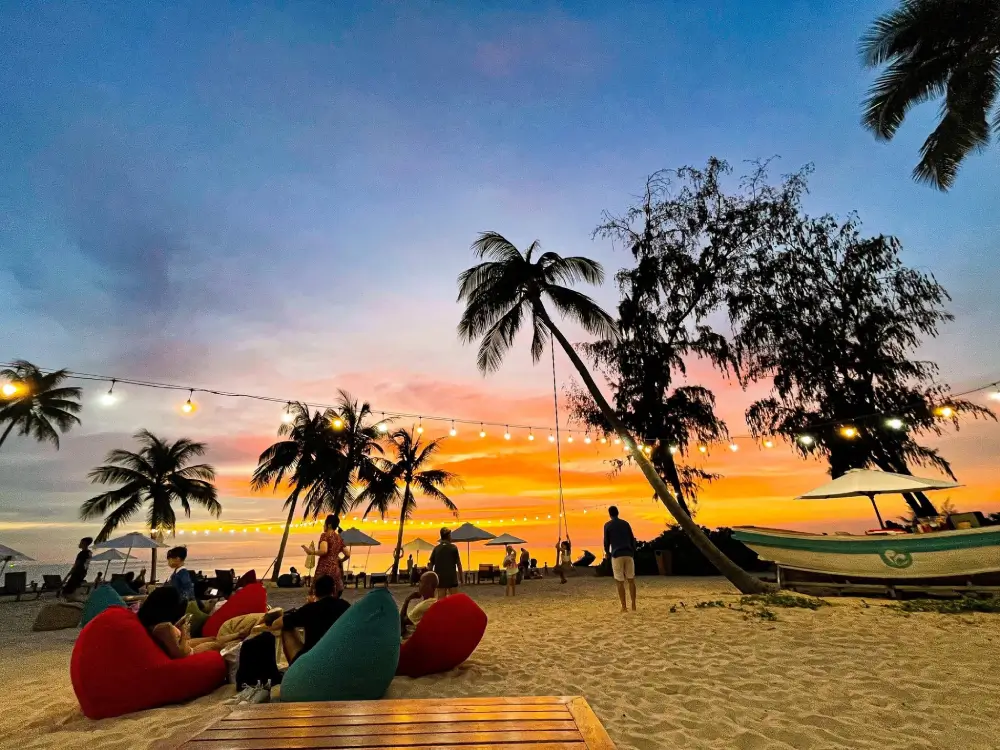
- Southern Island Route: Visit Cội Nguồn Museum in the morning ➔ Head south in the afternoon/evening to take photos at Khem Beach and Sunset Town & experience the Hòn Thơm Cable Car.
- Northern Island Route: Visit Cội Nguồn Museum in the morning ➔ Head north in the afternoon to explore the national park & Rạch Vẹm Fishing Village.
Route 1: Explore Central Dương Đông (The Closest Destination)
- Morning (8:30 – 10:30): Explore the 5 floors of Cội Nguồn Museum.
- Midday (11:00 – 13:00): Enjoy bún quậy or seafood in central Dương Đông, Phú Quốc.
- Afternoon (14:30 – 17:30): Visit Dinh Cậu in Phú Quốc to watch the waves, then drive out to relax by the clear blue water at Ông Lang Beach, Phú Quốc.
- Evening (18:30 – 21:00): Stroll around Phú Quốc Night Market to eat grilled seafood and buy souvenirs.
Route 2: Head to the Colorful South of the Island
If you’re heading toward the southern part of the island, you can continue your journey after visiting the museum:
- Swim at the beach with fine white sand at Khem Beach, Phú Quốc.
- Experience the Hòn Thơm Cable Car, the world’s longest overwater cable car route.
- Enjoy a romantic sunset at Sunset Town, Phú Quốc and walk along the beautiful Kiss Bridge, Phú Quốc.
Route 3: Experience Untouched Nature in the North
For those who love untouched nature:
- Travel through the pleasantly cool primary forest in Phú Quốc National Park.
- Visit Rạch Vẹm, Phú Quốc to enjoy fresh seafood at floating houses and admire the bright red starfish.
Final Thoughts
Coi Nguon Museum Phu Quoc is more than a place to store objects faded by time. It’s a memoir told through images and artifacts, recounting the difficult yet proud journey of the Pearl Island’s residents since the earliest days of settlement. Setting aside about 1.5 to 2 hours to visit will give your trip much more depth and meaning.
If you need more advice on an independent Phú Quốc travel itinerary, booking cable car tickets, or booking a tour to experience local life without hidden costs, feel free to message us for dedicated support!
Frequently Asked Questions (FAQ)
Where is Coi Nguon Museum Phu Quoc, and what is the most convenient way to get there?
Visitors arriving by motorbike can park for free in the museum courtyard. If you arrive by taxi or a large tour bus, the driver can conveniently drop you off right at the main entrance on Trần Hưng Đạo Street.
How much is admission to Coi Nguon Museum Phu Quoc in 2026? Do children get in free?
This price includes full access to all 5 exhibition floors and the rooftop observation area. Visitors do not have to pay any additional hidden fees inside the exhibition areas.
Is Coi Nguon Museum Phu Quoc worth visiting, or is it only suitable for older adults?
Older adults will enjoy the quiet atmosphere and collection of ancient ceramics. Children and young visitors will be excited by the marine life collection, the unusual dugong skeleton, and the panoramic photo views of the sea off Dương Đông from the fifth floor.
How long does it take to see all of Coi Nguon Museum Phu Quoc?
If you just want a quick look around: Allow about 45–60 minutes. If you enjoy reading every historical information panel carefully and examining the artifacts in detail: Set aside a full 2 hours.
Are photography and filming allowed inside Coi Nguon Museum Phu Quoc?
Remember to turn off your flash when photographing wooden or ceramic artifacts up close to protect their original colors. Do not bring bulky professional filming equipment (such as large light stands or drones) inside without permission from management.
What tourist traps or hassles should I watch out for when visiting Coi Nguon Museum Phu Quoc?
Local warning: Be cautious of unfamiliar motorbike taxi or taxi drivers who deliberately steer you toward outside private pearl shops, claiming that "the museum is closed." Always check the exact opening hours (7:00–11:00 and 13:00–17:00) before heading there.